The bicycle assembly industry is on a path towards automation, pushed there from two sides: customers demand a higher and more consistent standard every year, while skilled operators get harder to find and keep.
Reliability of the operations
One of the oldest problems on an assembly line is the reliability of the operations before final assembly: a line runs at the pace and quality of its least predictable one, and that shows up as rework, stoppages and lost output.
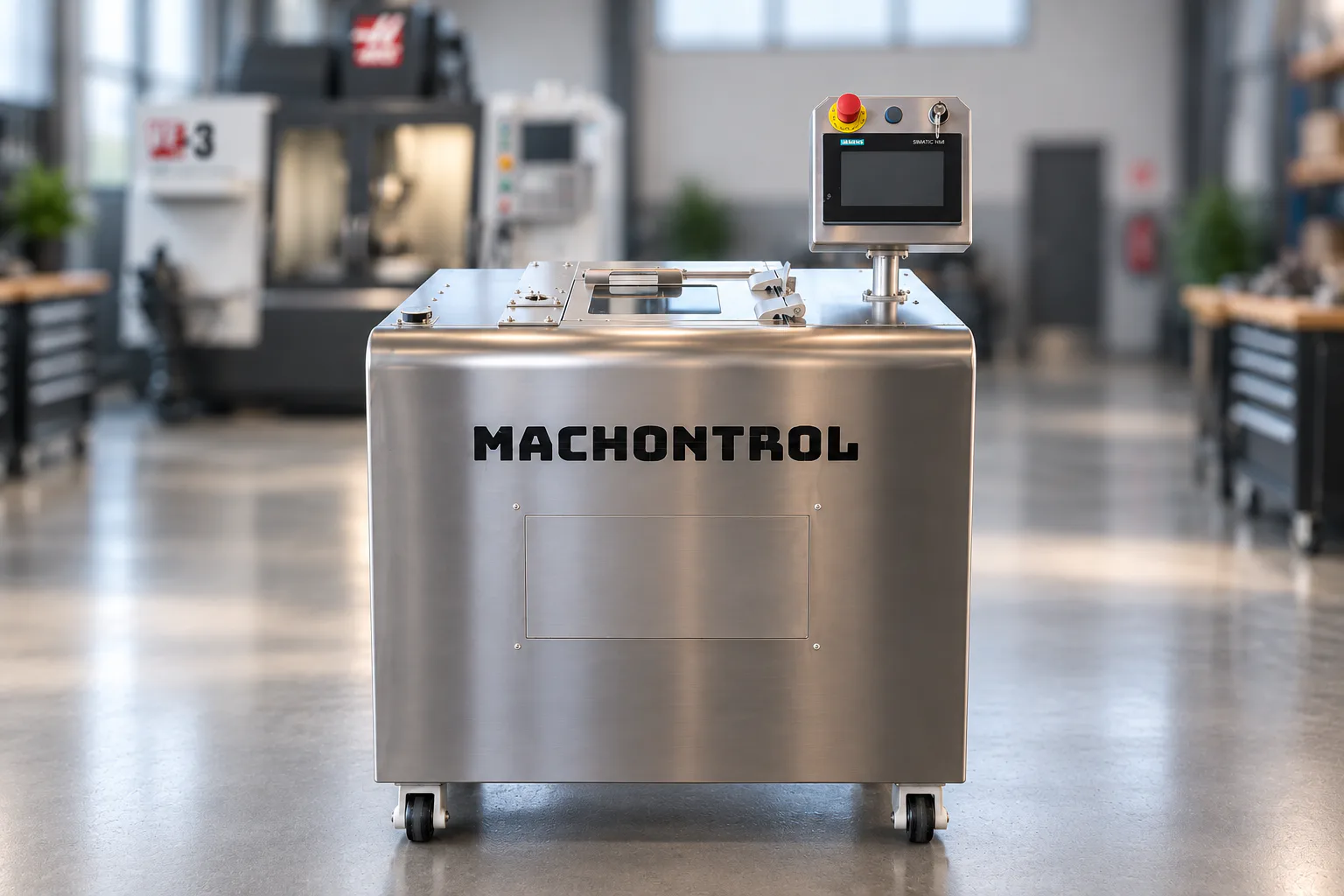
Machontrol has been solving that for over two decades, and its machines run in European factories today. The new fork cutting machine (MCFe-27) and fork press machine (PFe-27) join a third already in the field, covering the two operations that decide whether a fork reaches final assembly ready to fit: cutting and pressing.
Cutting: length, cut quality, and the material in hand
A steerer has to be cut to one specific length. Cut it long and the correction happens further down the line. Cut it short and there is no correction at all — the fork is scrapped.
On a manual station that measurement depends on a sheet of paper and a machine somebody set by hand that morning. On the MCFe-27 the recipe is already there: the operator selects the reference, and the parameters that run are the ones that were approved, not the one read off a page. Steel and aluminum steerers are cut to length and chamfered in a single cycle, across diameters and lengths, with no tooling change between references.
"Most of the noise at a fork station comes from the cut itself. A disc or a band running all shift is what people hear across the building," says Ricardo Santos, CTO at Machontrol. "So that is where we started. A machine that has to be shut away in its own corner is not really part of the line."
Carbon is a different problem, and it has its own machine. The MCFD-26 carbon fiber fork cutting machine cuts composite steerers inside an enclosed area, with a connection point for the factory's extraction system. The requirement is not only a clean, delamination-free cut, but it is capturing an abrasive dust before it reaches the operator or the line.
Adapting a machine is always possible, because the drawings, the workshop and the control software are all ours”
Pressing: square, to depth, every time
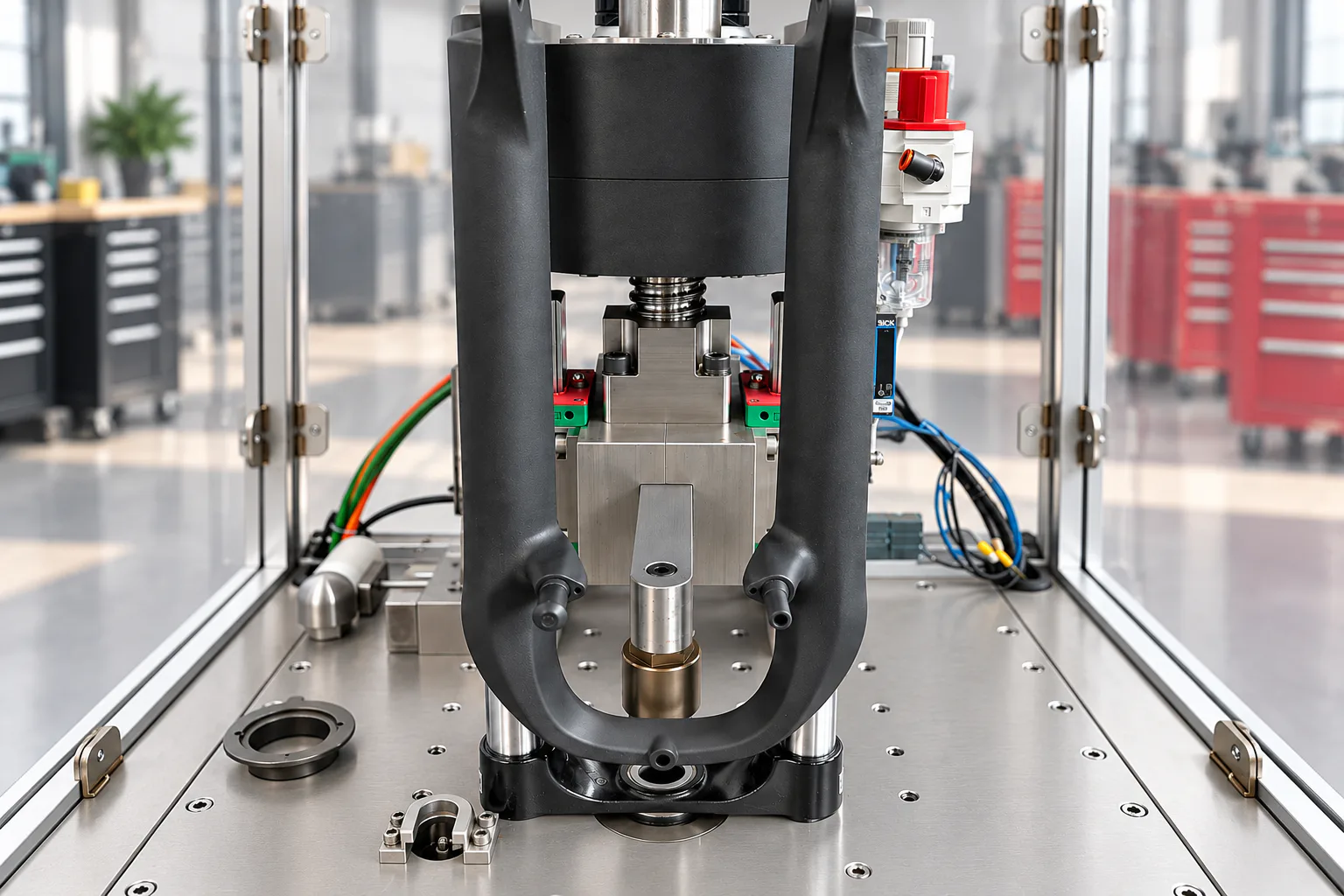
Pressing has a low tolerance and the most hand judgement left in it. The head cup must go in square and fully seated; the star nut straight and to depth — too shallow and headset preload is wrong, too deep and it cannot be recovered without scrapping the steerer. On a manual station both are judged by eye, and nobody finds the mistake until the cup is in.
"The parameters are values that the machine holds, not a judgement somebody makes at seven in the morning, and that is what makes a process reliable," says Santos.
Faster, and less expensive to put on the line
The MCFe-27 and PFe-27 answer the two things the market kept asking about: cycle time and price. They keep the build: same workshop, same control platform, same connectivity and conformity as the range.
"The target was efficiency, in the machine and in the process," says Santos. "Everything the fork process needs is there. What is not there is the specification the process never used, and taking it out made the machine quicker, not weaker."
Both are also built for the people who stand at them. "An operator who does not want to be at a machine is a quality problem waiting to happen," he adds. "Comfort is not a soft benefit on a production line, it is what keeps the process stable."
Designed and built in Portugal
Every Machontrol machine is designed, engineered, machined, wired, assembled and tested in Portugal, in Machontrol's own facilities. This applies to the whole process, from the first drawing to the machine that leaves the door.
It also means the catalogue is a starting point, not a fixed specification. An unusual fork profile, a layout that will not take the standard footprint, a feeding sequence that has to match the factory, any of it can be built in before the machine ships.
"Adapting a machine is always possible, because the drawings, the workshop and the control software are all ours," emphasises Santos. "And for a lot of factories that is what matters: being able to fit the machine to the way they work, both in the process itself and in how their data is handled."
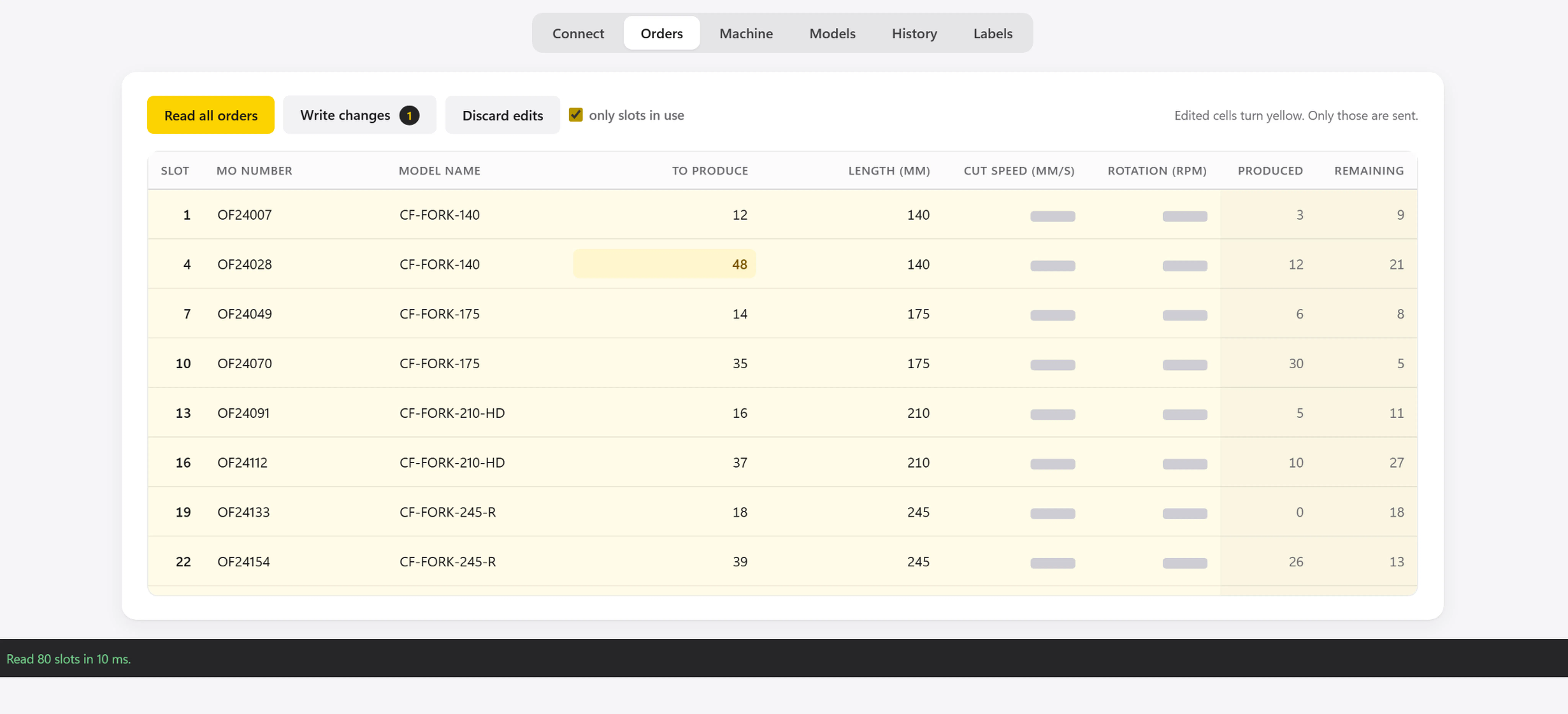
Every machine is also connected as standard, inside the factory's own network, with no route in from outside. Data moves both ways: manufacturing orders are sent down to the machine, and what it produced comes back. Output is visible as it happens and the production data stays in the building.
“Want to know what this would change on your line?” concludes Santos. “Send the daily fork volume and steerer types you run, and you will get back a price and an indicative cycle time for your own production — not a catalogue. And if you have looked at a Machontrol fork machine before, look again: the numbers changed.”
This article is sponsored by Machontrol.