








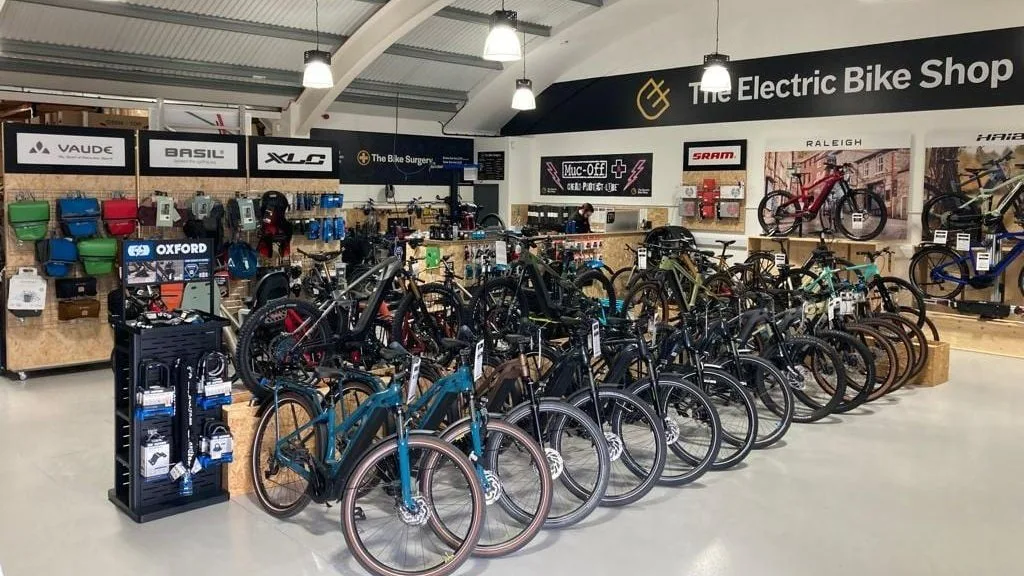
Report: lease returns up 68% a year as German used-bike buyers favour dealers
A survey for German insurer Alteos found that 39% of cyclists planning to buy a used bike would buy it from a bicycle dealer, against 14.3% for private online marketplaces. Supply is growing: lease returns in Germany have risen by an average of 68% a year since 2023, according to Zukunft Fahrrad.

Pon's Lease a Bike opens network to retailer Decathlon
French sports retailer Decathlon has joined the Dutch network of Lease a Bike. 50 of its bicycle models are now available through the business leasing platform owned by Pon. The two companies are targeting employees in the Netherlands who can lease a bike through their employer.

'Sparta will have its own DNA': Tenways details post-acquisition strategy
With the acquisition of Sparta on October 15th, Tenways added an iconic Dutch bicycle brand to its portfolio. The Dutch brand founded by a Chinese-European team bought Sparta's assets and trademarks with an ambitious goal: to bring the bicycle brand back to the forefront of its home market.

Lemmo partners with carmakers in China, prepares cargo launch for Europe
Berlin-based e-bike brand Lemmo sells its Zero folding e-bike in China through carmakers rather than bicycle retail. Since a partnership with Nio began in 2025, the Zero has received tens of thousands of orders through the carmaker's Nio Life store.

Decathlon opens EUR 15 mln Oberhausen flagship with second Van Rysel shop
French sporting goods retailer Decathlon opened a EUR 15 million flagship store in Oberhausen, its 117th in Germany, on 16 October 2026. The 4,500 square metre store houses the second German shop-in-shop of Decathlon's road and gravel brand Van Rysel, plus one for e-bike refurbisher Rebike Mobility.

Voi revenue up 53% in Q3 as fleet grows 40%
Scandinavian micromobility operator Voi Technology AB reported net revenue of EUR 88.2 million for the third quarter of 2026, up 53% year-on-year. Riders took 53.2 million rides on its shared e-scooters and e-bikes, compared with 37.4 million a year earlier.
US e-bike injury rate up 760.2% since 2023
US health data company Truveta recorded 10.1 e-bike-related hospital emergency visits per 100,000 emergency patients in January-August 2026, up from 1.2 in the same period of 2023. That is an increase of 760.2%. The rate for conventional bicycles rose 7.9%, from 59.4 to 64.1.

Halfords cycling sales rise 8.3% in H1 of its financial year
British retailer Halfords Group plc grew like-for-like sales in its cycling business by 8.3% in the first half of its financial year, faster than Motoring or Autocentres. Group like-for-like sales rose 7.1%, helped by summer demand for seasonal products. Halfords is keeping the full-year profit guidance it raised in August.
Bosch reorganises corporate structure and creates Mobility subsidiary
Robert Bosch GmbH will transfer the German operations of its Mobility business sector, which includes all activities for the car and bicycle industries, into a separate, wholly owned subsidiary from 1 August 2027.

Tariff refunds lift Thule's margin as chairman steps down
Swedish sports and outdoor company Thule Group raised its third-quarter operating margin to 20.0%, but mainly thanks to SEK 52 million (EUR 4.7 million) in refunded US import tariffs. Without them, the margin would have been 18.0%, in line with last year. The results come two days after the company's three largest shareholders pushed out chairman Hans Eckerström, who had planned to step down in spring 2027.
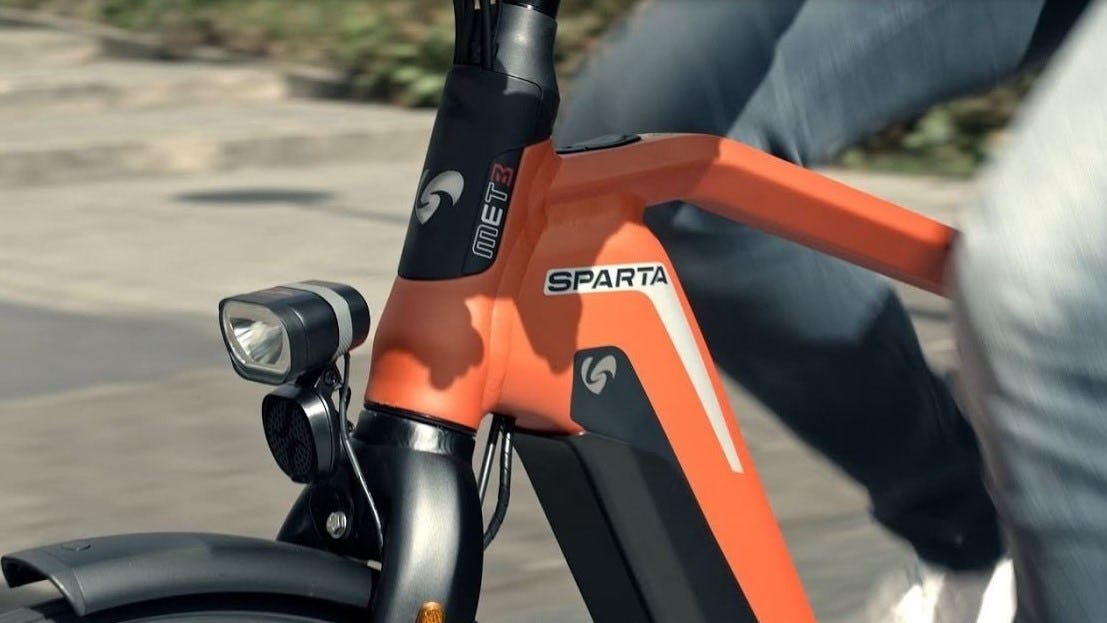
Tenways plans 2027 independent restart of former Accell brand Sparta
Chinese, Amsterdam based, e-bike brand Tenways aims to resume Sparta sales in 2027 after acquiring the Dutch brand's assets. Sparta will keep its own identity and be run by its own team, instead of being absorbed into the Tenways brand.

Mips sales jump 59% as helmet market prepares for 2027 recovery
Swedish helmet safety specialist Mips AB posted a 59% surge in Q3 net sales to SEK 215 million (EUR 19.3 million), driven by a twelfth consecutive quarter of growth in its cycling division.
 SponsoredSponsored
Sponsored Hutchinson launches cargo bike tyre with 200N puncture resistance
As cargo bikes have become an increasingly important part of urban mobility, reliability and safety are more than a matter of convenience. Hutchinson's new Republic Cargo is designed to provide the puncture protection, load capacity and everyday durability that cargo bikes demand, all year around.

Cannondale moves global headquarters from the US to the Netherlands
Pon.Bike-owned Cannondale is moving its global headquarters from Wilton, Connecticut, to Woudenberg in the Netherlands. The Wilton office will wind down by mid-2027, with global functions brought together in Woudenberg and in Freiburg, Germany, where R&D and engineering are already based.

Shimano and BYCS launch European bike bus accelerator
Shimano Europe and cycling advocacy organization BYCS have launched the Bike Bus Accelerator, a initiative designed to fund and scale school 'bike bus' projects across Europe.

'EU court ruling threatens future of European e-bike assembly'
The General Court of the European Union ruled that customs authorities can classify e-bike parts imported in separate shipments as complete e-bikes. Industry association LEVA-EU warns that European assemblers relying on imported components now risk anti-dumping duties of up to 70.1%, retroactive claims and even criminal proceedings.

Before the deadline: Chinese E-bike brands face 3C Certification halts
Certification bodies in China have suspended the compulsory 3C certificates of selected e-bike models from leading Chinese brands. Consumers who bought those models cannot register them for road use. The crackdown comes ahead of stricter certification rules that take effect on 1 November 2026.
 SponsoredSponsored
Sponsored Spanninga launches new Base, Beat and Pulse rear-light collection
As e-bikes become more sophisticated, bicycle lighting is evolving too. Rear lights are increasingly being integrated into the overall bike design, while new functions are helping improve rider safety. Spanninga is responding to these trends with its new Base, Beat and Pulse rear-light collection.