Held annually, Taipei Cycle Show has grown into Asia’s largest bicycle trade show and one of the most influential gatherings in the global industry, attracting thousands of professionals from across the supply chain. But beyond the statistics, Taipei Cycle has something many other trade shows struggle to recreate: a compact, open and genuinely collaborative atmosphere.
Where crazy Ideas turn into tangible prototypes
In cycling, innovation often begins with a sketch, a bold concept, or what some might initially call a crazy idea. Trade shows are the place where these ideas become tangible. Trade shows like Taipei Cycle have specific start-up areas and support small, innovative entrepreneurs to get visibility in the industry.
A designer arrives with a prototype frame made from a new composite. A component manufacturer experiments with a lighter braking system. A startup introduces a smart integration solution for e-mobility or battery management. At Taipei Cycle, these ideas are not just displayed, they are tested in real conversations.
Across the halls, highly specialized Taiwanese manufacturers present new production technologies designed to make products lighter, faster, safer and more sustainable. From advanced composites to battery integration and micro-mobility solutions, trends appear simultaneously from multiple directions: materials, manufacturing processes, electronics, digital services and sustainability concepts.
The show itself reflects these developments. Exhibits range from complete bicycles and components to e-bikes, drive systems, cargo bikes and smart mobility solutions, demonstrating how rapidly the cycling ecosystem is evolving. In many cases, the first visible sign of a trend is not a finished product but a conversation around a prototype.
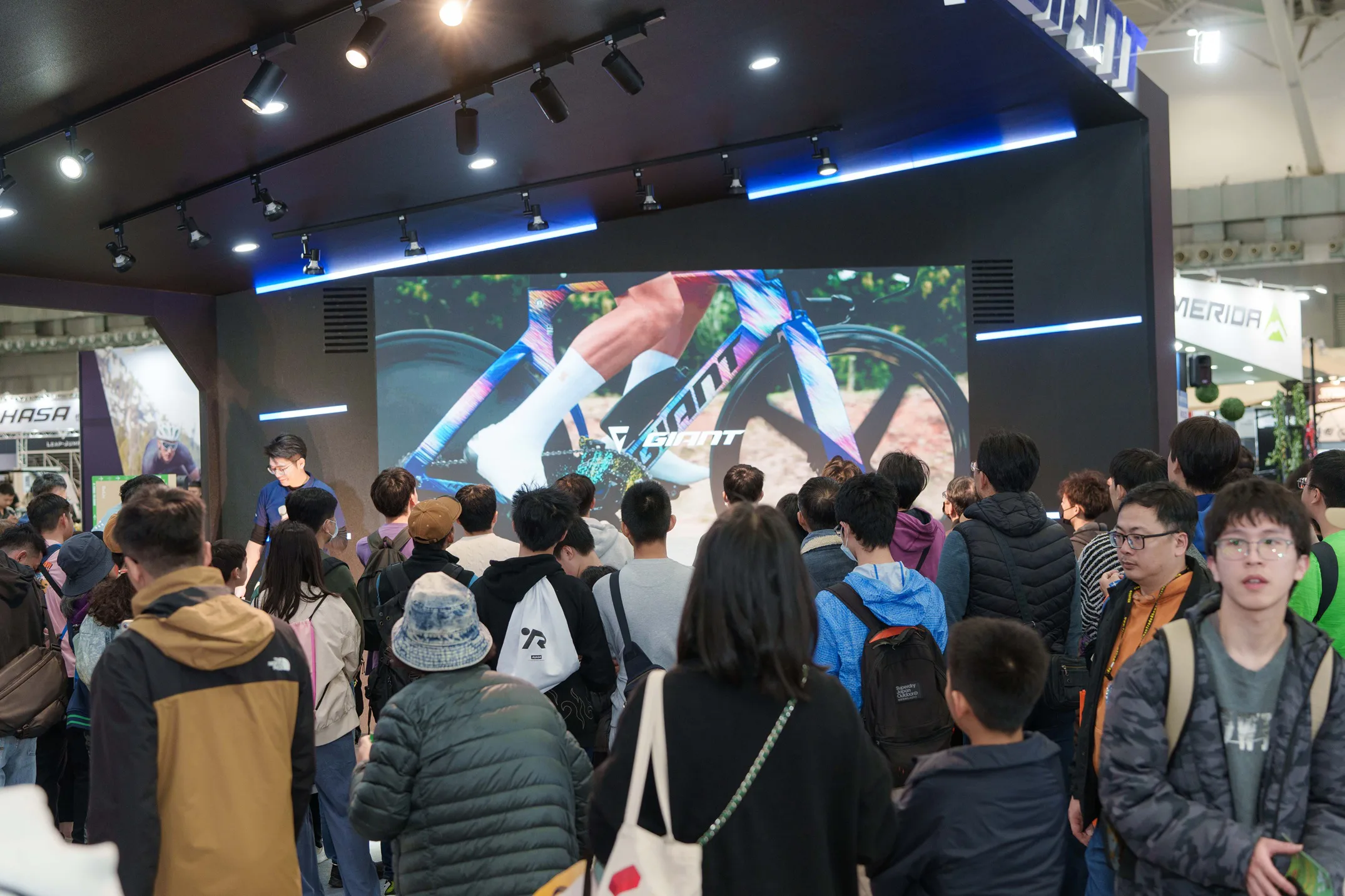
A trade show designed for conversations
What makes Taipei Cycle particularly effective is its simplicity. The show is concentrated in a small number of halls, primarily TaiNEX Hall 1 and Hall 2 making it easy to navigate even for first-time visitors. Within just a few minutes, visitors can move from drivetrain suppliers to e-mobility startups, from advanced materials specialists to accessory innovators. And right across the street are food malls and casual dining spots where discussions continue over lunch or dinner. This physical proximity plays a surprisingly important role in how business happens.
One booth builder who has worked at the show for many years recently described it this way: “After three days at Taipei Cycle, you usually know what the trends will be, what you should work on next and who the right partners are. That kind of insight only happens face-to-face.” Networking is not confined to exhibition hours. Small conferences, award events and industry dinners extend the dialogue well into the evening. For many visitors, this combination of compact layout and informal meeting spaces creates one of the most efficient networking environments in the global cycling industry.
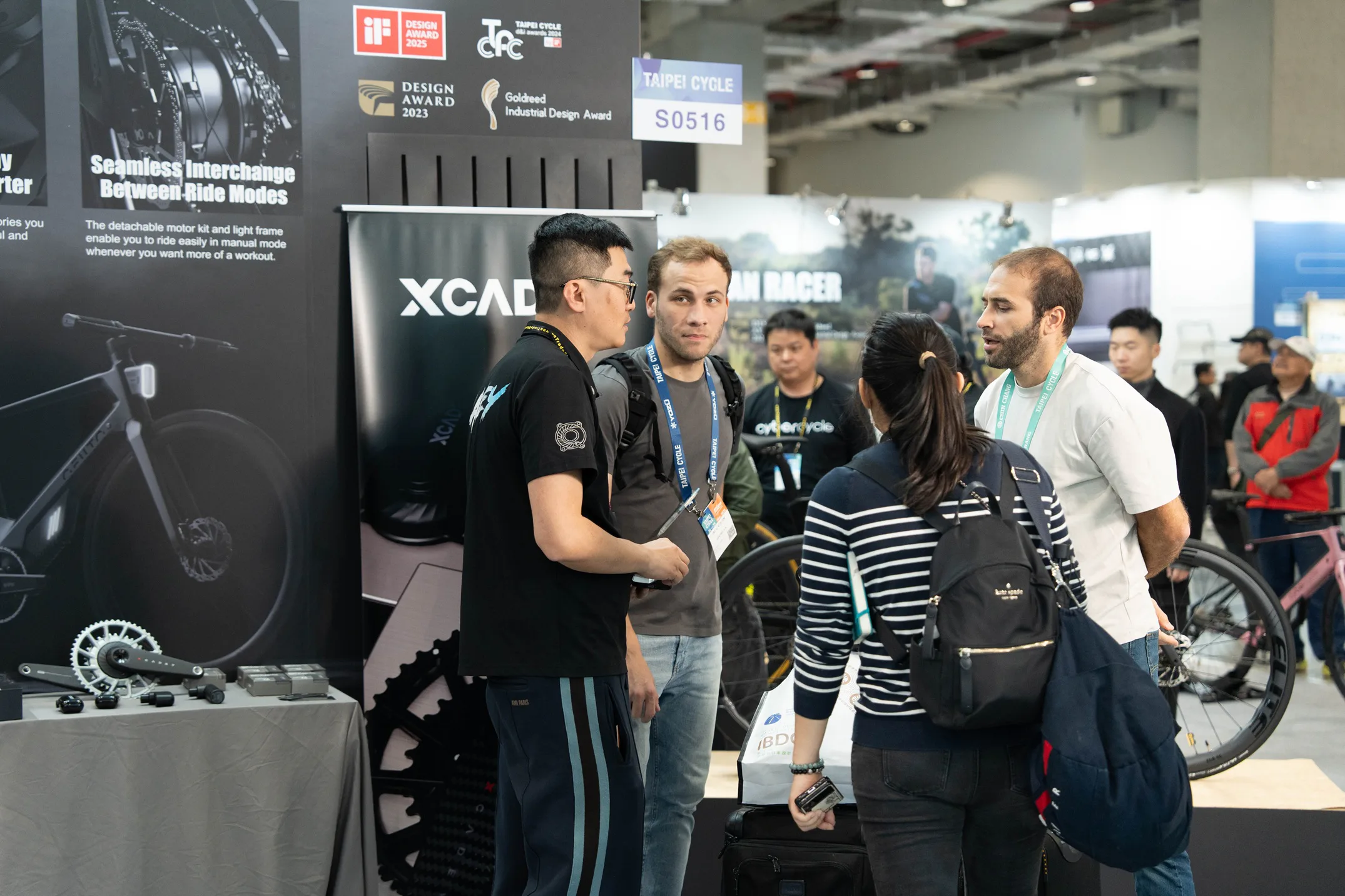
A new generation of Asian innovators
Another reason Taipei Cycle feels different today is the emergence of a new generation of Asian exhibitors. Taiwan has long been known for its precision manufacturing and deep integration into the global bicycle supply chain. But the current wave of companies is increasingly design-driven, entrepreneurial and globally minded.
Young engineers and founders are eager to explain their ideas, demonstrate prototypes and discuss potential collaborations. The traditional supplier-client relationship is evolving into something more dynamic: innovation partnerships. Many exhibitors arrive not only to sell products but also to explore possibilities, whether in smart integration, sustainable materials, connected mobility or new urban transport solutions. For visitors, this openness makes it remarkably easy to start conversations.
You might stop at a booth to look at a new seatpost design and leave with insights into next-generation production technologies or battery integration strategies.
Seeing the industry’s direction
Trade shows have faced questions in recent years about their relevance in a digital world. Yet in industries driven by engineering, materials and manufacturing, like cycling, the value of physical interaction remains hard to replace. A prototype can be touched. A component can be examined. A design challenge can be discussed directly with the engineer who created it. This is where the real advantage of events like Taipei Cycle lies.
Within a few days, visitors gain a snapshot of the industry’s direction:
- which technologies are gaining momentum
- which new materials are being tested
- which sustainability concepts are moving from idea to production
- and which partnerships are beginning to form
In many ways, attending Taipei Cycle feels a bit like traveling into the future of cycling.
Not because the answers are already finalized, but because the first signals are visible and the people behind the ideas are open to show and explain everything first hand.
Finding new prototypes on a booth table and staring a conversation with the person who built it is what makes every trip to Taipei worth the investment.
This article is sponsored by Taipei Cycle Show.