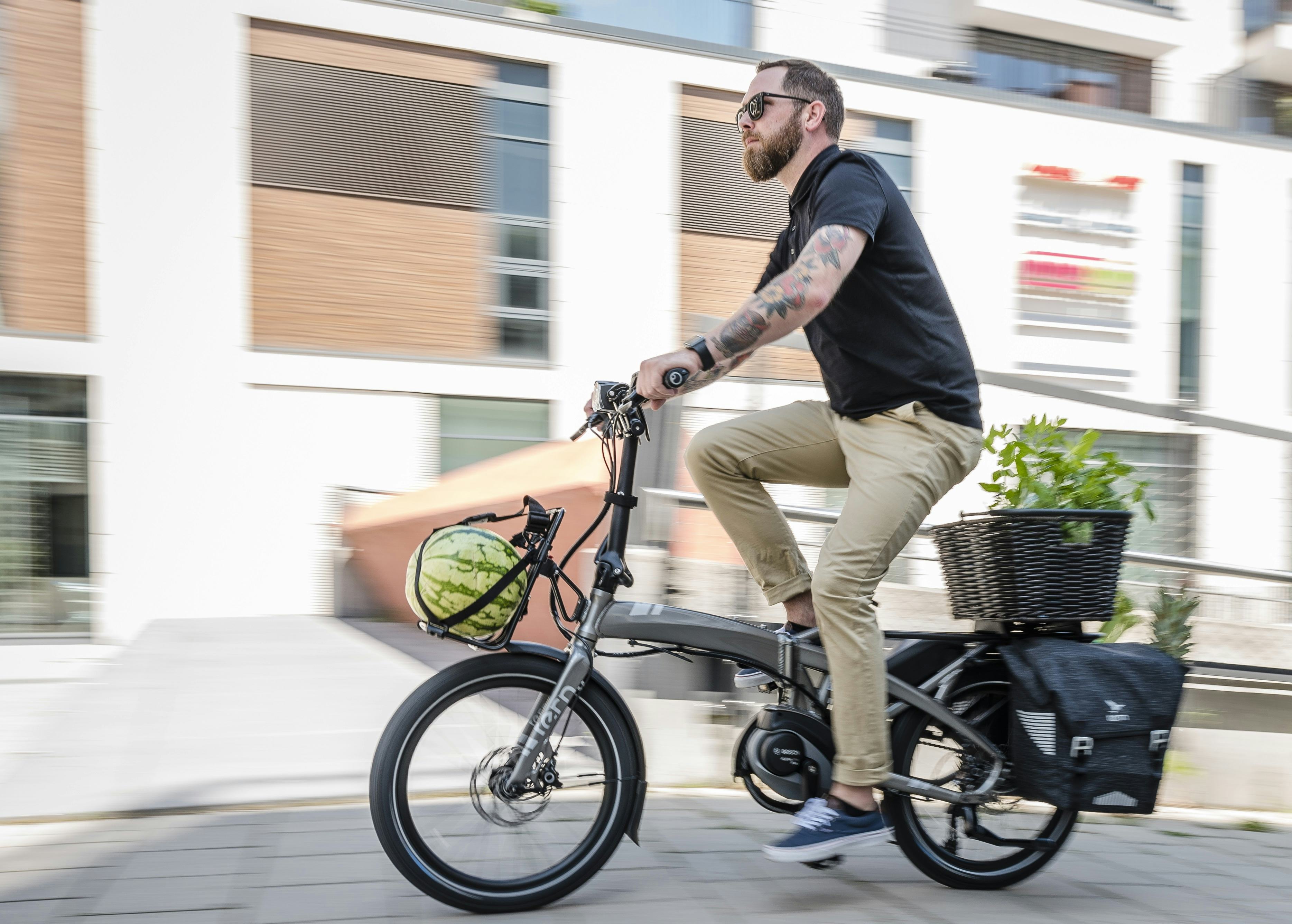
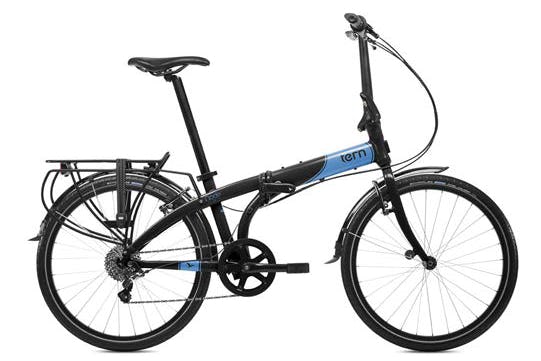
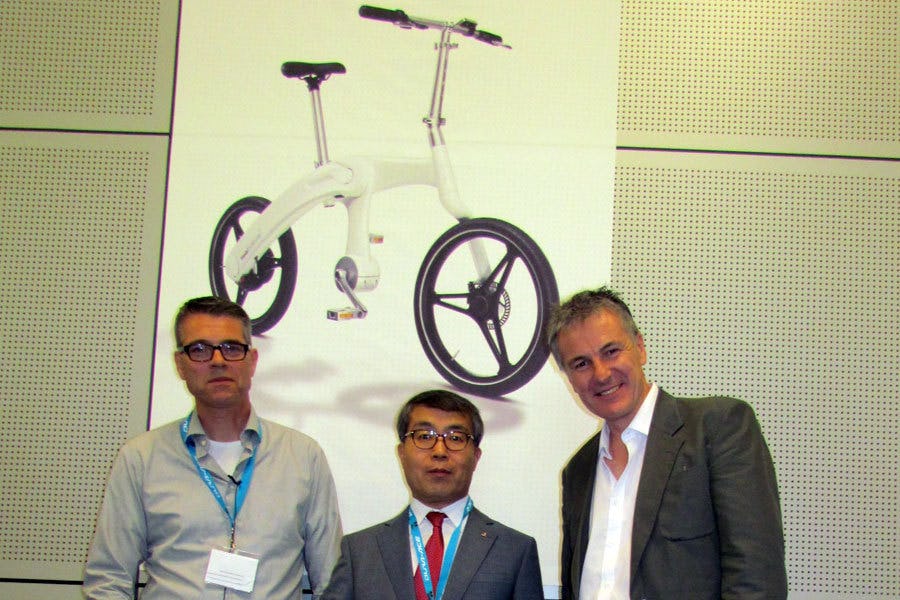
The renewed interest in folding bikes is both practical and fashionable. More cyclists are combining train travel with commuting to work, making compact and easy-to-carry bikes relevant again. For people with limited storage space, or those looking for a bike that fits into a multimodal routine, folding bikes offer a level of convenience that other categories cannot always match. And where in the past the looks of the majority of the folding bikes were all driven by functionality, it now becomes a segment with exiting new designs and look-and-feel.
Not a standalone trend
The result is that folding bikes are no longer just a niche topic. Brands are approaching it as part of a broader urban mobility portfolio or diversity growth within the segment. In some cases, that means revisiting a segment that had previously been scaled back. In others, it means using folding bikes to respond to a market that is becoming more diverse.
“Folding bikes are not a standalone trend,” says Thomas Lecoq, marketing director at Ananda. “They are part of a broader diversification of the e-bike market. As brands expand their portfolios to include a wider range of e-bike categories, each type requires a motor with its own specific characteristics. At the same time, efficient drivetrain integration is becoming increasingly important, with factors such as cable routing, weight, installation space and overall system volume playing a key role.”
The many different bike concepts make it more practical to work with suppliers that give full support, rather than only taking over a small part of the development, production and services process. The Shanghai based company responds to this broader diversification with a wide range of hub motors and mid-drive systems, as well as an open system approach.
Developing a folding bike
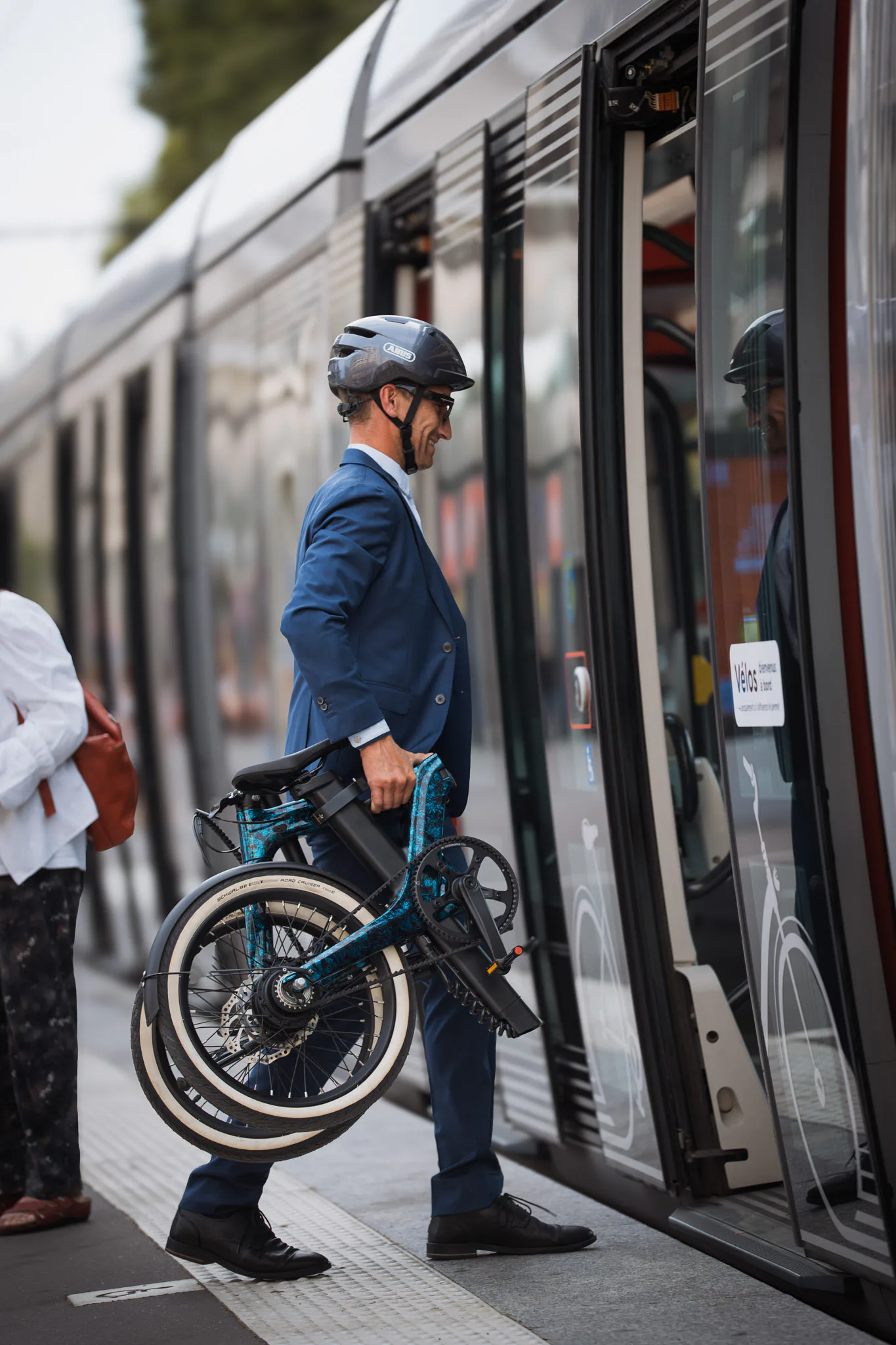
A folding-bike project comes with a different set of challenges than a traditional eCity bike. The system needs to be lightweight and compact, since the user needs to lift and carry the bike. Cables and connectors need to be carefully integrated and designed around the folding mechanism. And the battery needs to be removable while still fitting within the compact frame design. The display also needs to be robust enough to withstand frequent transport, while remaining simple and intuitive to operate.
While folding bikes come with their own set of technical demands, riders still expect a smooth and dependable ride. The motor therefore needs to support the bike without making it feel heavy or unpleasant to use.
For product managers, time-to-market is an important factor. New trends, like folding bikes, need to reach the market quickly to respond to changing market demand. This requires quick integration and a suitable drive system without starting the supplier selection process from scratch again.
Front or rear hub motor
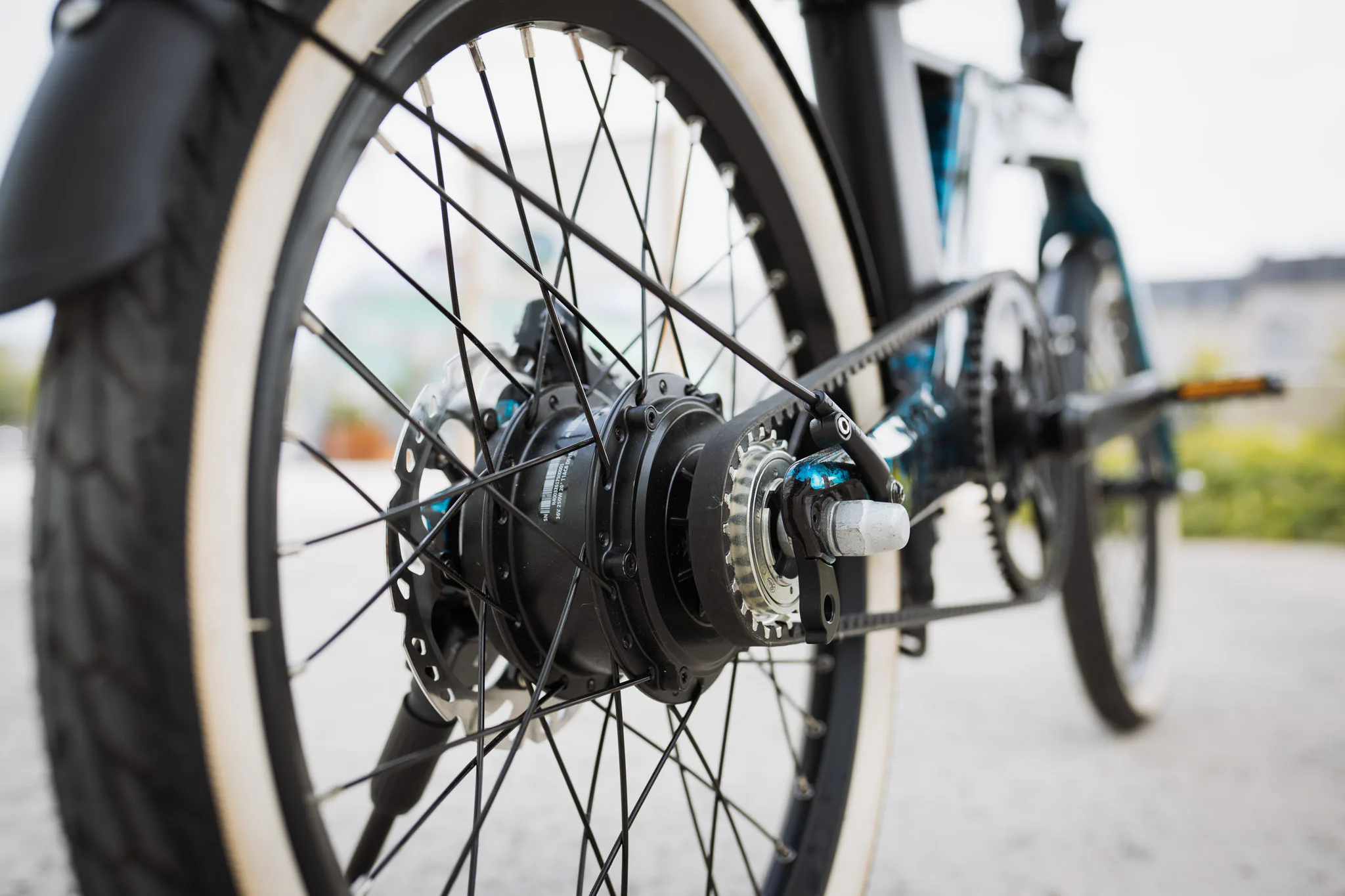
“In many folding bikes, a hub motor is a natural fit for the folding segment, mainly because of its compactness and low weight,” explains Lecoq. “It helps keep the overall bike compact while supporting a straightforward design. Take the R400 motor from Ananda, available as both a front- and rear-hub motor solution. With a noise level below 50dB and up to 50Nm of torque, it provides strong acceleration while weighing just 2.2kg, making it the perfect choice for discreet performance in a lightweight package. An even lighter 1.4kg version is currently under development and will launch soon together with the lightest controller in the portfolio.”
“Another option for folding bikes is the R900, which combines a rear-hub motor with an integrated 3-speed automatic shifting system,” continues Lecoq. “At 3.8kg and with 50Nm of torque, it reduces the need for additional components such as a derailleur and shifters, making it a great choice for solutions where the bike’s drivetrain needs to be as clean and integrated as possible.”
With multiple mid-drive and hub-motor solutions and custom integration options, brands can select a system based on specifications and needs, rather than adapting the concept to just a single motor. The same flexibility applies to the rider interface, offering a broad selection of HMI solutions, from integrated displays with the latest technology to simple and intuitive interfaces designed around ease of use. Across all solutions, robustness remains a key factor, which is specifically important for folding bikes due to the nature of their use, transport and storage. This is reflected in Ananda’s clientele, which includes brands such as Brompton, Fiido, Roxform, Vellobike, and Folt.
Folding bikes will continue to respond to broader market conditions and changing consumer behaviour”
Category in motion
The folding bike segment is not gaining renewed attention because of one single trend. Instead, several mobility shifts are coming together at the same time. Multimodal commuting, limited storage, changing rider preferences and the need for practical urban transport all support the segment’s return in new and existing product offerings.
“That said, market movements in the bicycle industry are rarely linear,” says Lecoq. “Like other bike segments, folding bikes will continue to respond to broader market conditions and changing consumer behaviour. That makes short-cycle flexibility important not only for brands, but for the full supply chain.”
For Ananda, that flexibility is part of the value proposition. It is embedded in the flexible system approach. And its broad system portfolio allows brands to work across different bike categories without having to rebuild their supply structure every time the market changes.
Lecoq concludes: “In a complex segment like folding bikes, where compactness, performance and integration all come together in a highly competitive market, brands benefit from working with an experienced e-drive partner. Beyond the drive system itself, a complete ecosystem of components, integration support, diagnostics and service helps bring reliable products to market faster.”
This article is sponsored by Ananda.