Imagine you’re stuck with 600 items of a specific part. What does one do? Call industry peers to offer the batch to them? Sell it to a broker for a bargain price? It’s that struggle that Pieter-Jan Rijpstra saw when he was working as commercial director at Accell Western Europe. At the time, he would regularly move parties of surplus stock from one brand to another, leading him to question the efficiency of that process.
B2B platform for surplus stock

That was also the reason that shortly after he left Accell, he decided to launch a B2B-platform for OEM trade of surplus parts. “I had the idea for some time, so I started to work it out. At that moment there was really only one option, which was selling your leftover stock to a broker. While at the same time, maybe a bike brand that was willing to pay much more, was also interested.”
The platform has a simple setup. Brands and assemblers (both OEM only) can register and join the BEIC to offer and buy batches of parts, which can be viewed on the online platform that is only visible to the involved parties. Most of the time, there are about 1,500 to 2,000 different offers available, which can be traded between the different parties.
Positive feedback
Quite swiftly it was clear that Rijpstra hit a sensitive spot within the cycling industry, because different OEM stakeholders were interested from the gun. “Now, there are about thirty parties involved. They post their obsolete stock and sell it to one another. There are multiple advantages. This way you can get stock from Europe that is directly available instead of getting it from Asia with a much longer lead time. Besides, it is a way to buy new parts for a much lower price than the original price. At the same time, the seller is getting a much better price than when selling it to a broker”, Rijpstra explains.
You can never plan 100%, there will always be surplus stock”
The quick purchasing of surplus stock allows brands to use BEIC as a flexible layer in their stock planning. “You can never plan 100%, especially with the long lead times of certain products where you need to predict up to a year in advance how many you need. There will always be surplus stock”, says Rijpstra. The fact that trading on the platform happens in a very transparent way is also praised by its users. “When you log in, you can see exactly what stock specific parties are offering. It’s a very transparent overview of what is available, from whom and at what price.”
New functionalities
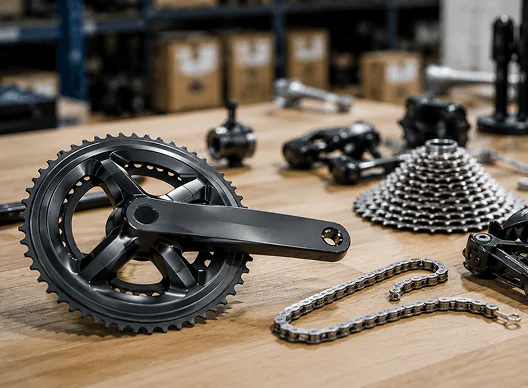
After two years, there has been a constant flow of and demand for bike parts on BEIC. From derailleurs to brakes and from batteries to hubs. Recently, the platform has seen a thorough redesign with the addition of multiple features requested by the users. New functionalities allow users to upload bulk stocks much easier and make it more efficient to search for specific parts. At the same time, a refined notification system allows users to be alerted when specific parts have been listed on the online marketplace.
We offer a solution by bringing supply and demand together”
Although the look and feel of the platform have recently been refreshed, Rijpstra is already looking ahead, with new features in mind. “We want to start matching in a more supply-and-demand based way. For example, users could enter a list of products they have to offer and they’re directly told which party could be interested. Secondly, we’re also looking into AI and how we can use that for better matchmaking. Sometimes the exact part someone is looking for is not available, but a very good alternative is. We’ve seen cases that a little nut or bolt was missing from a product but we managed to find the missing part and fulfil a specific request. AI can help us streamline that process.”
Right moment
Regardless of how BEIC develops, Rijpstra expects its purpose to remain the same. “I think I began this platform at the right time. Back then, people were saying: next year will be better. The second half of that year, that still wasn’t the case. Then came 2026 and also then demand remained undefeated. What I’ve noticed is that there is no such thing as optimal planning and there will always be obsolete stock. We offer the solution for that by bringing supply and demand together.”
This article is sponsored by BEIC.