

Automatic shifting isn't simply about matching gears to speed. Approaching a steep incline or pulling away from a light are moments where the right gear makes all the difference. But what if the bike could anticipate that shift before the rider has to react, letting them stay completely immersed in the ride?
From automated shifting to full manual control
Bafang built that philosophy straight into the RG E510.D, the newest addition to its Gear Variable Transmission (GVT) family. The 5-speed electronic hub lets riders choose between automated shifting and taking full manual control.
For manufacturers, it offers crucial production-line flexibility: brands can set default start gears for an effortless pull-away or lock the system into automatic mode for minimalist city builds designed without shift buttons.
“Riders don’t chase a single, static cadence; when effort spikes, their rhythm naturally fluctuates,” notes Cedric Gao, senior software engineer at Bafang. Rather than treating cadence as a rigid target, the software starts from the rider's preferred cadence and is designed to balance cadence and effort.
Reading the road ahead
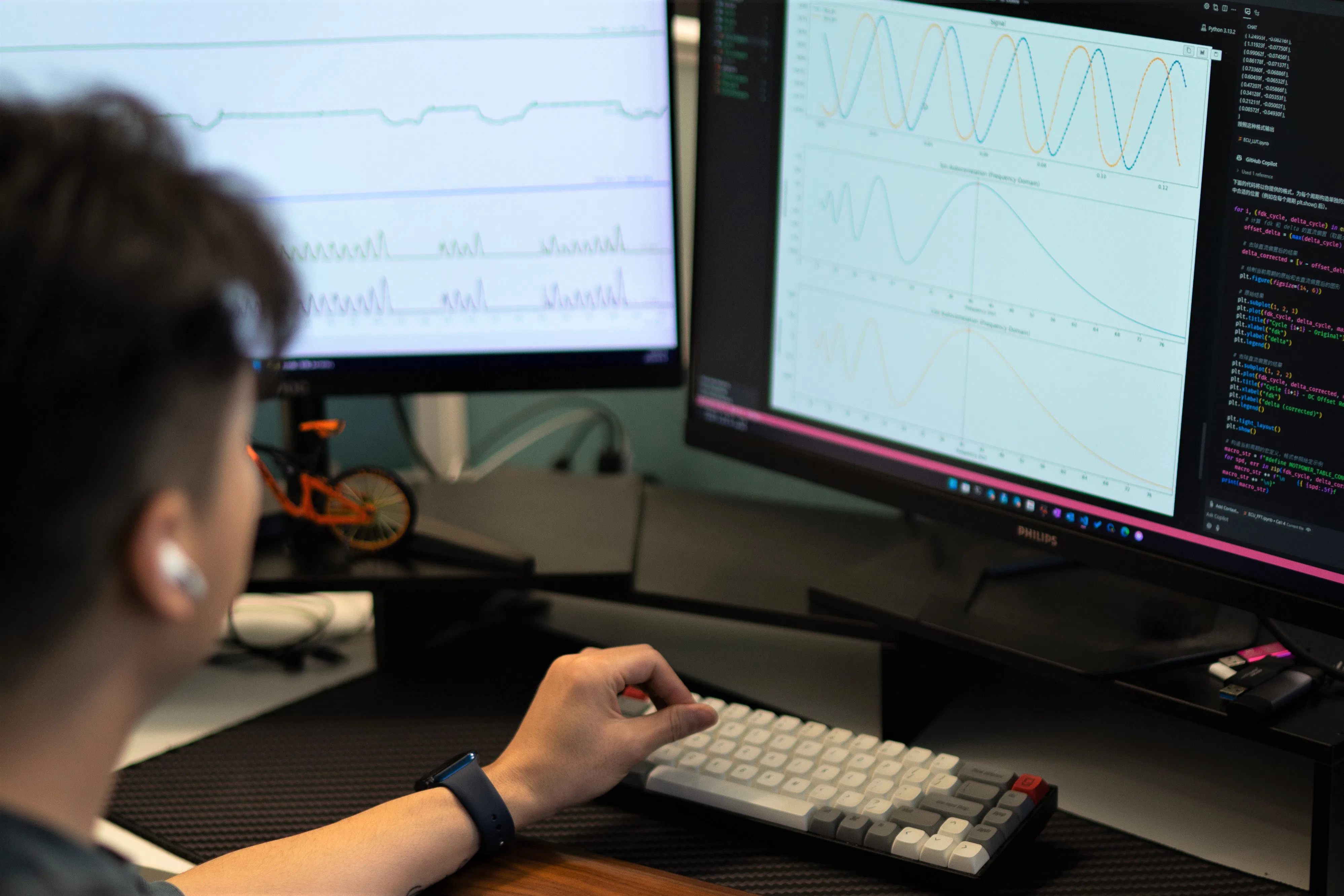
The RG E510.D swaps standard single-magnet sensors for a built-in 24-pulse wheel speed sensor. At roughly 5 km/h on a standard 28-inch wheel, where a conventional sensor refreshes about once every 1.5 seconds, this setup delivers approximately 15 updates per second. That high-frequency data sharpens low-speed response, whether you're pulling away, climbing, or using Walk Assist, taking the friction out of everyday riding situations.
Additionally, a built-in 6-axis IMU tracks movement and gradient changes, giving the system a head start to recognise climbs early and shift down before momentum drops. Advanced software filters distinguish genuine climbs from braking or rolling over kerbs, leaving the rider free to enjoy the flow of the climb without sudden interruptions. “The aim is to understand what is happening around the bike, rather than simply reacting after the rider has already felt the change,” says Gao.
The software looks at the pattern of each pedal stroke to predict a suitable moment for shifting”
Getting the timing just right
Choosing the right gear is only half the battle; changing it at the precise moment is the other. Shifting under a heavy pedal load causes noise and jolts, so the RG E510.D is engineered to execute shifts when pedal force naturally dips during the stroke.
Instead of fixed timing, the software analyses individual pedalling patterns to find the next low-force window. “The software looks at the pattern of each pedal stroke to predict a suitable moment for shifting, reducing drivetrain load and making gear changes feel natural,” Gao explains. The software only relies on this prediction once several consecutive pedal strokes show a consistent pattern.
Team effort between hub and motor
Operating as an integrated drive system, the RG E510.D pairs closely with the motor. The motor supplies real-time torque and cadence data, while the hub reciprocates with gradient data and shift-timing signals.
When a shift is due, the motor momentarily reduces output to unload the drivetrain where needed for a smooth gear change. This lets riders shift mid-climb without easing off the pedals.
Furthermore, the hub’s gradient data enables compatible mid-drive motors (including the Bafang M210, M410, and M430) to adapt to slopes without an onboard IMU.
Built to evolve
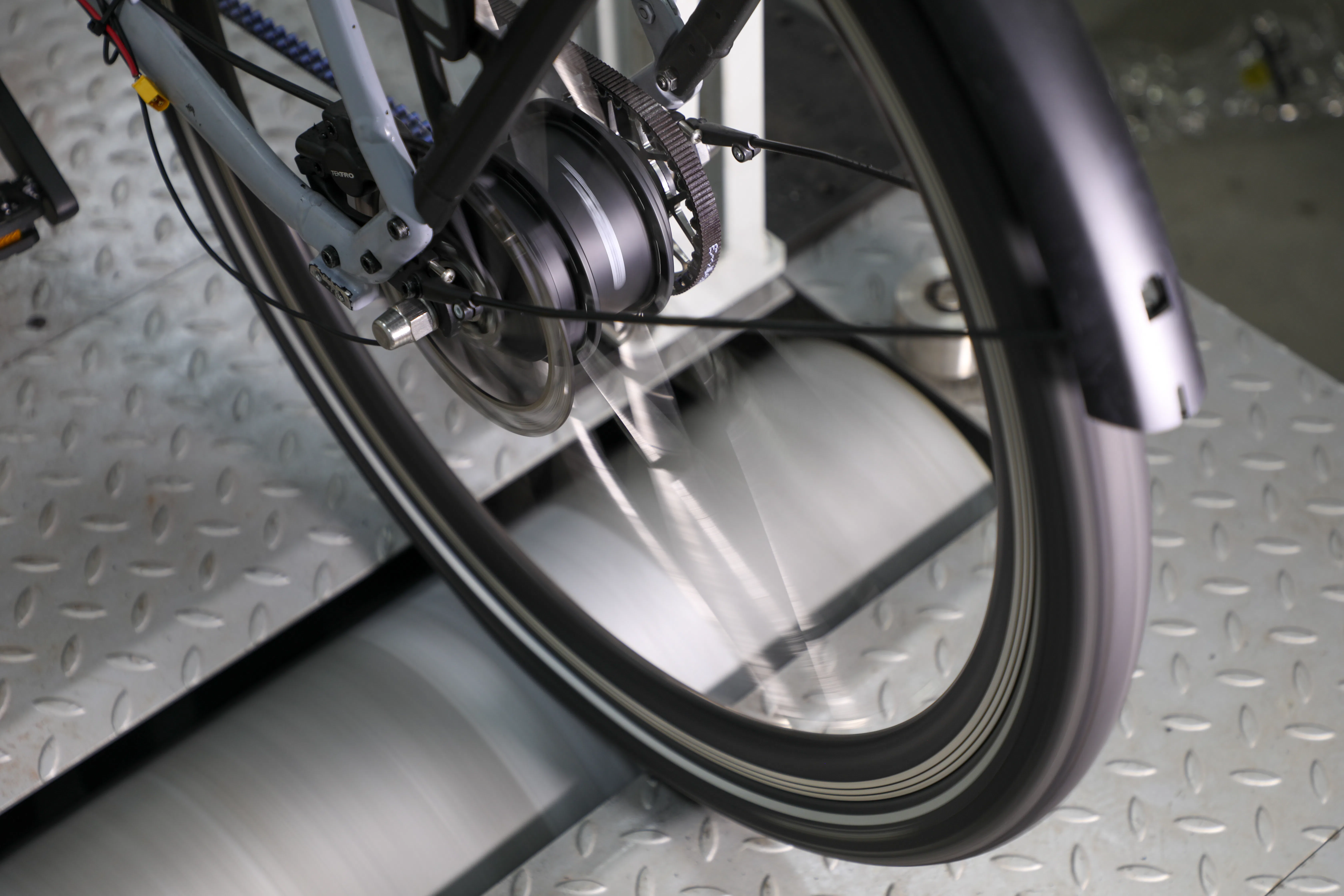
Bafang put the RG E510.D through extensive pre-launch testing, logging over 300,000 clutch cycles, over 3,000 hours of ageing tests, and 20,000 km of simulated riding on a single test unit, alongside an IPX6 water-resistance rating.
Early trade testing has already received a strong early reception from European retailers. Björn of 12GO Biking highlighted the system's "smooth, quiet, excellent system matching", while Pim Verbeeten of Pimbike.nl noted that "upshifts feel slick, low noise".
With upcoming over-the-air updates like semi-automatic starting modes and dynamic cadence targets, the platform is built to evolve. But the core ambition remains unchanged: to make automatic shifting feel less like a clever mechanical feature and more like an extension of the rider's own intuition.
This article is sponsored by Bafang.


