Next Gen Cargo: Bafang's M430 drives profitability and uptime
Europe's cargo-bike market is evolving fast. As urban logistics, postal fleets and family cargo usage scale, OEMs need a mid-drive that can reliably support heavy load performance while delivering predictable behaviour and long service life under commercial duty cycles. The M430 was designed to fill that gap.
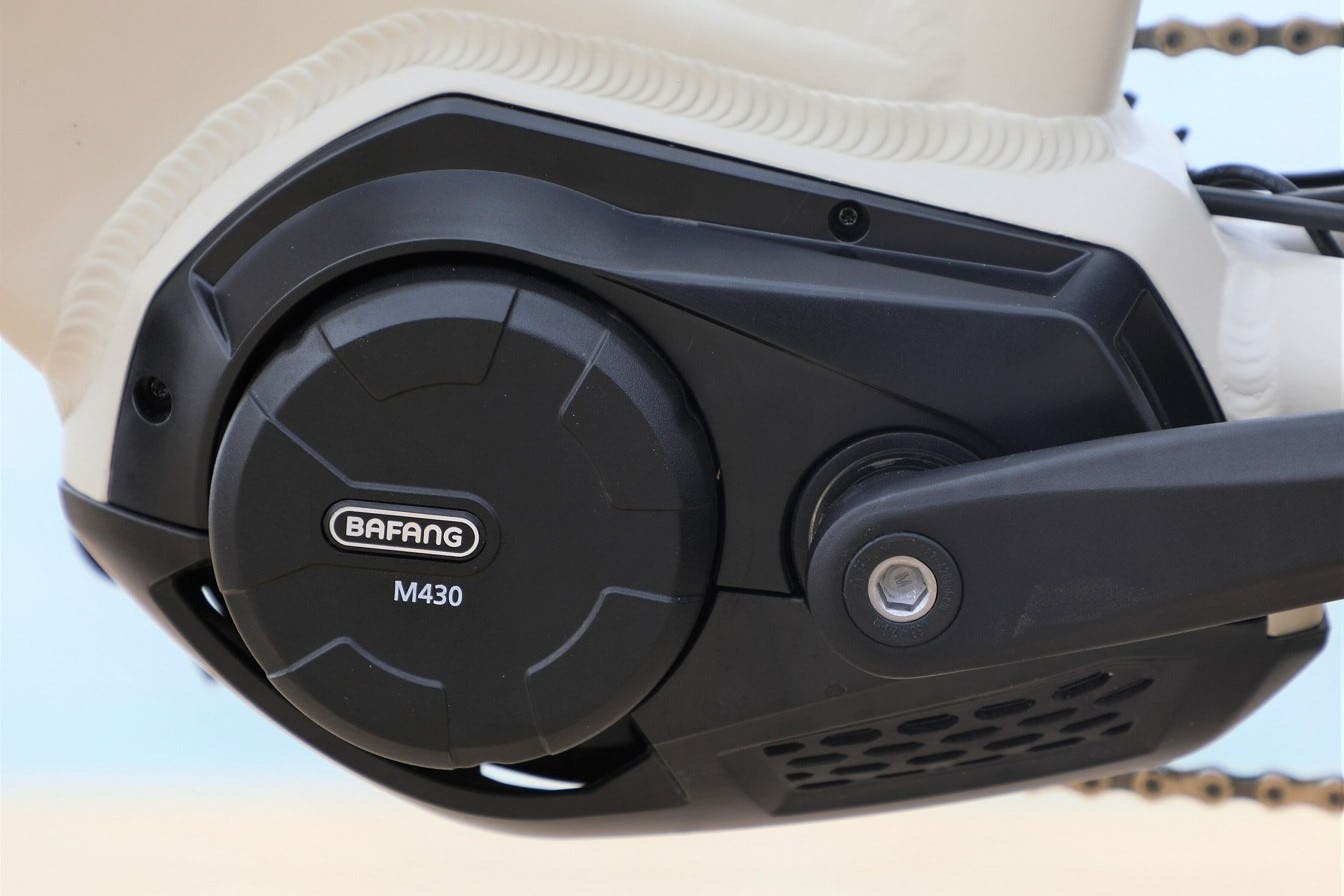
Bafang, a leading supplier in e-bike drivetrains, is positioning its new M430 Drive System as a purpose-built mid-drive for demanding commercial duty cycles. Designed to support up to 300kg total system weight, while delivering 120Nm maximum torque, 910W peak power and an 800% maximum assistance ratio, this professional-grade drive system solution is improving uptime, predictable performance, and total cost of ownership.
Strong and reliable
"Since its launch at Frankfurt last year, the M430 has received positive feedback from European industry partners,” says Leo Wang, Bafang senior R&D manager. "The most consistent feedback centers on its balance between high torque output and long-term reliability, particularly when integrated into heavy-duty cargo bike platforms." That balance of performance without sacrificing durability, gets to the heart of what fleet operators and OEMs are now asking for.
The most consistent feedback centers on its balance between high torque output and long-term reliability”
Sustained heavy-load riding
The M430 was engineered around the daily realities of cargo fleets including repeated stop-start riding, mixed road conditions, and the need for confident hill performance at full load.
Wang: "Peak power is useful, but fleets also care about sustained capability. On long climbs or summer routes where thermal limits can quietly throttle performance, the M430 is optimised for sustained heavy-load riding. This is achieved through active thermal management and intelligent power modulation; adapting output based on temperature, load and rider input to protect longevity and optimise range."
Using advanced thermal interface materials reduces the M430’s operating temperature rise by around 10%. Paired with an efficient control algorithm, it leads to an approximate 5% improvement in overall system efficiency.
The importance of torque
The torque is the motor’s rotational strength, directly affecting acceleration from standstill, hill climbing and low-speed power response. Pulling away from the curb with a full load is often the most difficult task for a drivetrain because of the repeated starts and low-speed climbing in traffic, with high system weight and inconsistent rider cadence.
The M430’s 120Nm has three measurable rider outcomes under full load:
Confident starts: strong launch torque that reduces hesitation from standstill
Improved gradeability: steady climbing without excessive rider effort
Controlled ride feel: smooth, linear assistance rather than abrupt surges, even under high load that feels natural
The 800% maximum assistance ratio is aimed at professional scenarios where riders must move heavy loads repeatedly, safely and with consistent effort. According to Wang: "Controllability at this level comes from dynamic assistance curves that adapt to speed, cadence and torque demand, multi-sensor input fusion to anticipate start-up and low-speed scenarios, and redundant monitoring that limits output if abnormal signals are detected."
Wang adds that the sensor’s high sampling rate and fast system response enable near-instant reaction, while temperature-compensated calibration helps prevent lag or surging in cold, heat and wet conditions.
Proven performance
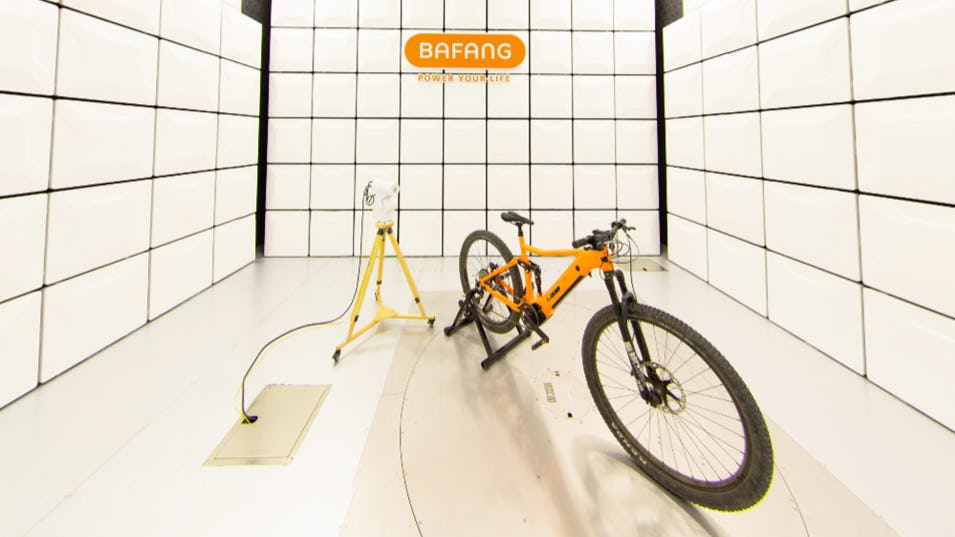
For hill performance at a full load of 300kg, the M430 has shown that it can support sustained climbing on 15–20% grades at stable, practical urban speeds. This outcome is based on combined bench endurance and thermal testing, fully loaded road testing, and climate-controlled environmental testing to ensure consistency across extreme temperatures.
The M430 isn’t just about higher numbers; it’s about building an e-cargo drive that fits how professional bikes are used, serviced and managed at scale”
Fleet-ready integration
On the operations side, the M430 supports enterprise-level configurability through the Bafang BESST Tool, which includes:
Custom ride modes with adjustable assist curves and output limits,
Fleet-wide parameter control for seasonal or route-specific tuning,
Rider access control to prevent unauthorized changes,
and maintenance reminders plus system health diagnostics.
Brands, OEMs, and end-users also have the possibility of more enhanced integration via collaboration with Bafang through partnerships with Comodule. For example; a micromobility IoT company that provides connectivity hardware and software for e-bikes, including GPS tracking, anti-theft wear, diagnostics, and data tools for manufacturers and fleet operators.
The full package
Bafang offers a modular, fast-service approach with pre-calibrated sensor modules for quick replacement, gearbox service kits, lifetime lubrication and advanced diagnostics (error logs, operating hours, battery health). All to support predictive maintenance and minimize downtime.
The company is also positioning the M430 as a system-level solution for OEM platforms with reinforced frame structures around the motor mount, durable drivetrains, high-capacity braking, low centre-of-gravity battery placement with secure retention, and adequate airflow around the motor for thermal stability. CAN-based communication supports deeper integration with displays, batteries and telematics.
Wang concludes: "The M430 isn’t just about higher numbers. It’s about building an e-cargo drive that fits how professional bikes are used, serviced and managed at scale."
Stay on top of the news with Bike Europe’s news coverage
The Bike Europe newsletters & updates are the primary source of industry news, data and analysis for the e-bike and bicycle industry’s decision-makers.