For decades, the cycling industry followed a top-down innovation model. Technologies developed for elite sports gradually trickled down to consumer products. In the e-bike segment, this translated into an intense focus on torque, maximum power output, and weight reduction.
Today, the market becomes more mature. While high-performance figures still hold value in certain segments, they are no longer the primary drivers of consumer decision-making in other. Within the industry, there is growing recognition that chasing peak specifications often exceeds real-world user requirements. This realization is prompting international bike brands to rethink their development strategies in today’s challenging markets conditions. Instead of isolated component sourcing, the industry is pivoting toward solutions that balance performance, cost, operational efficiency and (roadmap) flexibility.

From single components to a system platform
Historically, sourcing e-bike drive systems meant managing disparate components for different bike categories. An e-city bike, an e-cargo bike, and an e-MTB frequently required completely different brackets, hardware, wiring harnesses, and software packages. These differentiations creates challenges and inefficiency for engineering, compliance, logistic and procurement teams.
One forward-thinking company addressing this operational bottleneck is Ananda. By structuring product families around shared manufacturing standards, the brand has demonstrated how an integral platform approach can support varying segments and performance characteristics. This structural approach lays the groundwork for a true platform architecture: a shared technical foundation that supports multiple bike categories.
A unified platform extends far beyond modular hardware. It integrates shared electronics, communication protocols, and installation standards. Key components—such as motors, batteries, displays, controllers, and sensors—function seamlessly within a single ecosystem. For OEMs, this means multiple bike models can be developed on a single technical layout, avoiding the need to redesign the drive integration for every new application.
Operational efficiency across the value chain
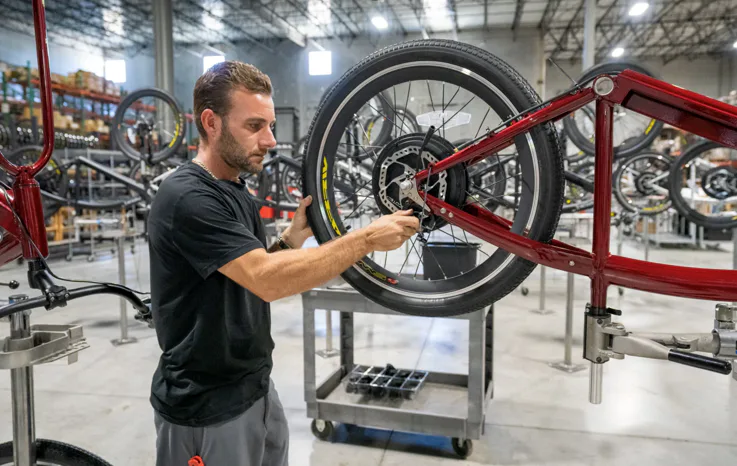
The impact of platform architecture is felt across the entire e-bike manufacturing and distribution chain. A single integration standard reduces complexity in frame design, allowing design engineers to utilize standardized hardware across trekking, urban, and mountain bike lineups.
Furthermore, standardized technical, service and compliance documentation and shared system logic enable development teams to work more efficiently, significantly shortening time-to-market.
- Supply Chain Optimization: Managing fewer part numbers lowers inventory pressure and simplifies logistics.
- Assembly and Quality Control: Consistent mounting and wiring processes reduce the risk of assembly errors on the production line.
- Aftersales and Service: Dealerships and distributors benefit from a unified diagnostic framework, simplifying repairs and spare parts management.
Not only does this approach reflect in abstract strategical or operational benefits, by reducing management of parts and part numbers, firmware packages, engineering files and corresponding revisions, it results in immediate simplification in day-to-day work.
By building on a shared system, OEMs gain vital long-term flexibility. New software updates or hardware iterations can be introduced without requiring a complete frame redesign, allowing brands to adjust product specifications based on real-time market demand.

The strategic shift toward scalability
This evolution is driven by fundamental changes in the global market. While the pandemic-driven sales boom has subsided, competition among brands has intensified, and sourcing strategies have become more risk-averse. Launching a new e-bike today requires a reliable, long-term technical strategy rather than a rush toward the highest power output.
As Ananda Marketing Director Thomas Lecoq explains, “OEMs are no longer looking for isolated high-performance solutions, but for stable, scalable platforms that allow them to adapt quickly to real market demand. It’s about long-term flexibility rather than peak specifications Using a system that supports that philosophy, helps creating a competitive edge over the established approach” This philosophy is reflected in the rollout of the M7000 series platform, which delivers distinct performance variants through a unified technical interface.
Versatile variants for targeted use cases
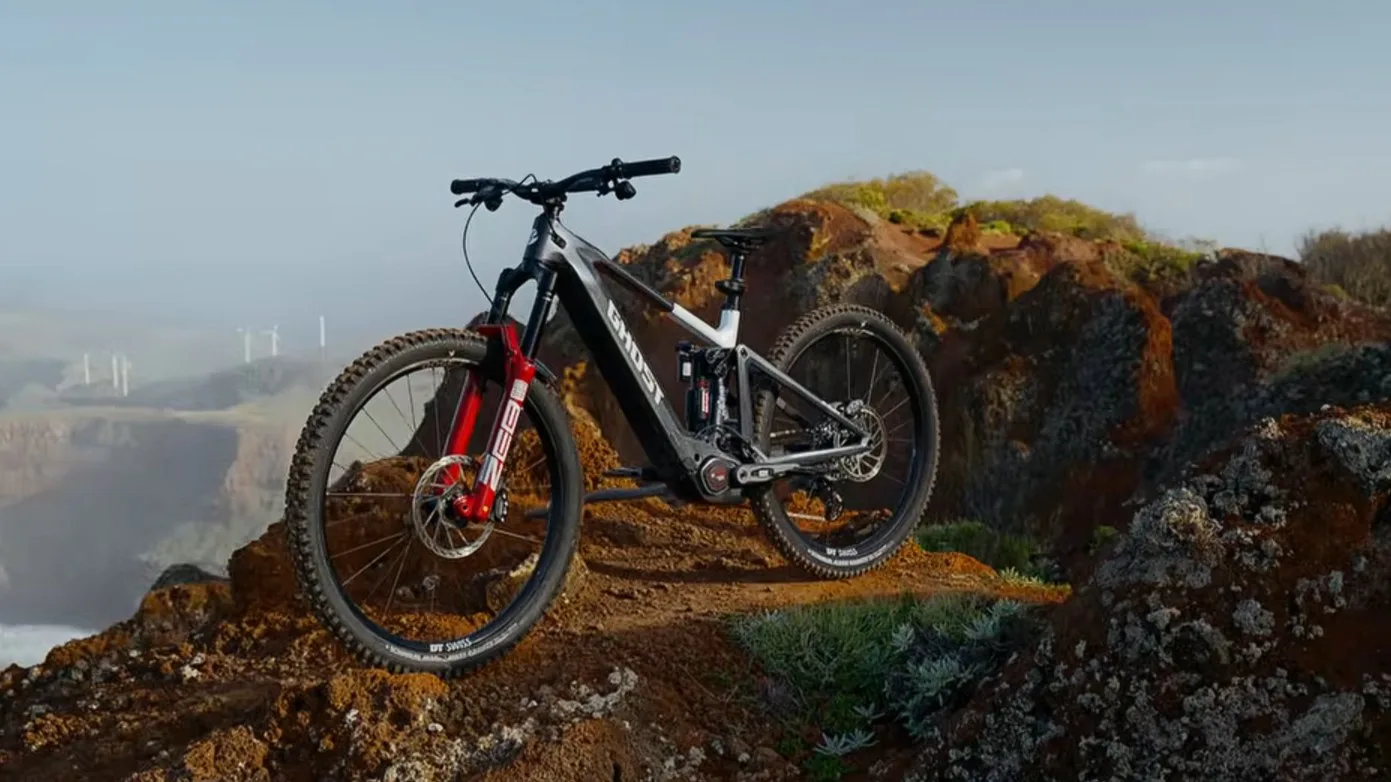
The platform approach allows manufacturers to address distinct market segments using the same technical footprint. The system is available in three targeted variants. The first variant, the M7600, is tuned for aggressive e-MTB applications and technical climbing, delivering 120 Nm of torque and 850 W of peak power. The second option, the M7200, is optimized for urban and trekking applications with 100 Nm of torque and 650 W of peak power.
Finally, the M7100 serves as an accessible entry-level solution for high-volume city and utility bike projects, offering 85 Nm of torque and 600 W of peak power. This tiered performance within a single system architecture allows brands to scale their product offerings efficiently while enabling a lean, agile operation.
This article is sponsored by Ananda.