For as long as bicycles have had wheels, wheel assembly has begun with a manual operation: placing spokes into a hub and lacing the hub into a rim. While automation transformed downstream processes such as tensioning, truing and quality control, the starting point of wheel production remained dependent on craftsmanship and experience.
“As demand for skilled labour increased and experienced wheel builders became increasingly difficult to recruit, lacing emerged as the industry’s last major production bottleneck,” says Jim Smits, sales manager at Holland Mechanics. “That is why we developed a solution to remove it, bringing full automation to the very first step of wheel assembly.”
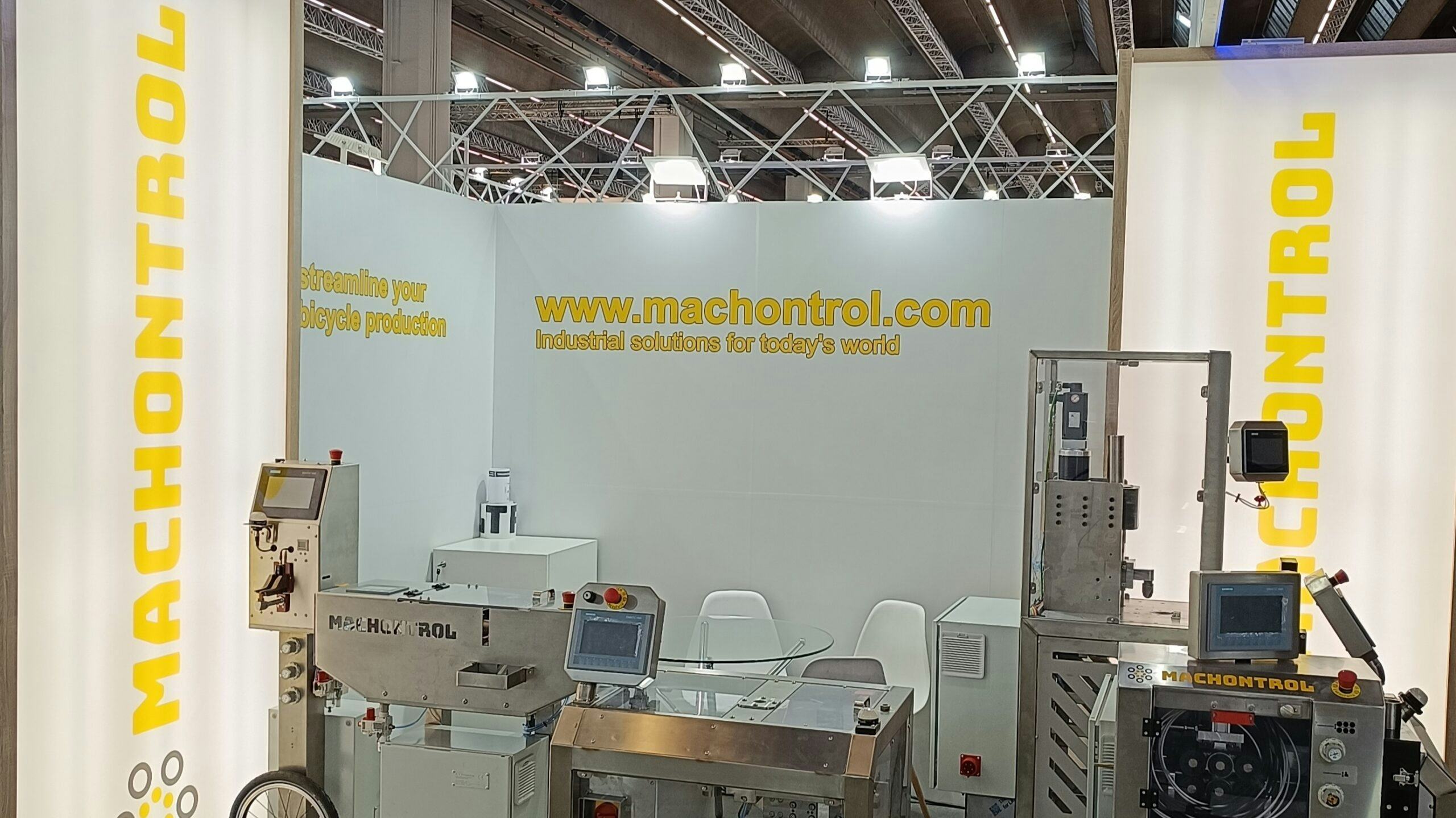
Prototype on show
Smits continues: “The prototype now on show does something the industry has never managed to combine. Robot arms insert straight-pull spokes directly into the hub. On the rim side, a catcher picks up each spoke the moment it arrives and threads on the nipple. The two actions have always been kept apart because doing them together demands that insertion and catching happen in the same instant, with no margin. Filling and lacing stop being two separate process steps carried out in two places. They become a single, simultaneous motion, and a fully laced wheel leaves the machine without a single human touch.”


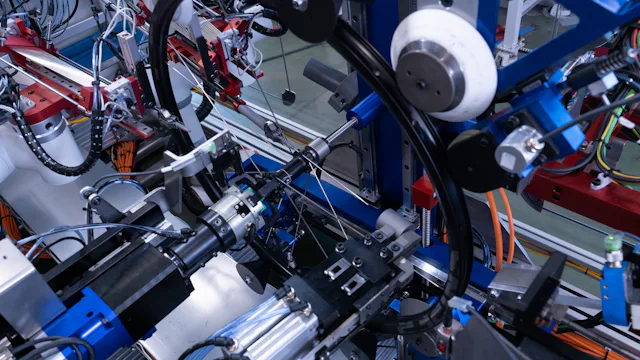


Continuous wheelbuilding line
For a manufacturer, the consequence runs deeper than one faster workstation. “Fed with hubs, rims and spokes, the machine laces wheel after wheel on its own, with enough component buffer to keep working while no one is watching,” emphasises Smits. “The real prize appears when it is connected to the downstream tensioning and truing robots that already exist on many factory floors. Together they close the last open gap toward something the sector has discussed for years without quite reaching: a wheelbuilding line that does not stop when a shift ends, runs through the night, and has finished wheels waiting at the start of the next morning.”
A fully laced wheel leaves the machine without a single human touch”
Quality and extra capacity
A line that runs unattended changes more than headcount, according to Smits. “Output stops depending on how many trained builders happen to be rostered on a given day. Quality stops drifting between a fresh operator in the morning and a tired one at the end of a long shift. Extra capacity comes from extending running hours rather than from finding people who, increasingly, are simply not there to hire. For a factory under pressure to produce more wheels with fewer hands, that change in the basic economics of assembly matters more than any single cycle time.”
Straight-pull hubs
The machine works only with straight-pull hubs. “That is a deliberate scope rather than a shortcoming,” says Smits. “Straight-pull has been moving steadily toward becoming the standard at the high end of the market, and its geometry is precisely what makes filling and lacing in one motion possible in the first place. For builders working in the premium segment, the rim and spoke range the machine handles already covers the bulk of what they produce.”
Shaping the tool
What stands on the show floor is an honest working prototype, not yet a production machine. The next stage is deliberately left open: the company is looking for development partners among wheel manufacturers willing to help refine the system around the realities of their own production and carry it through to a series machine. Smits: “For a builder already weighing how to deal with a shrinking pool of skilled labour, there is a real case for helping shape the tool now rather than waiting to buy it later.”
“The split between filling and lacing has organised wheel assembly for as long as anyone in the trade can remember,” he concludes. “It may turn out to be the next assumption the factory floor quietly leaves behind.”
This article is sponsored by Holland Mechanics.