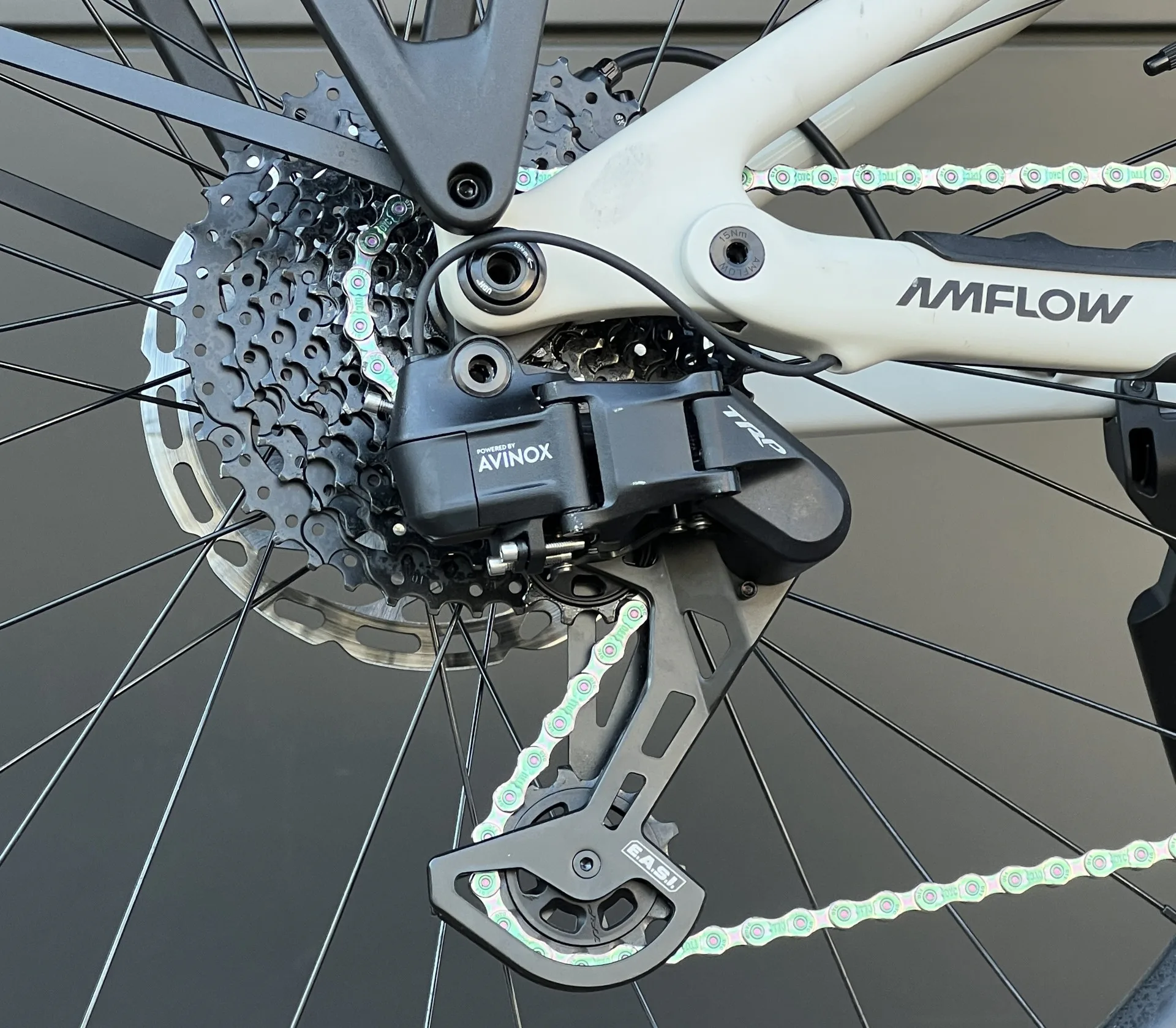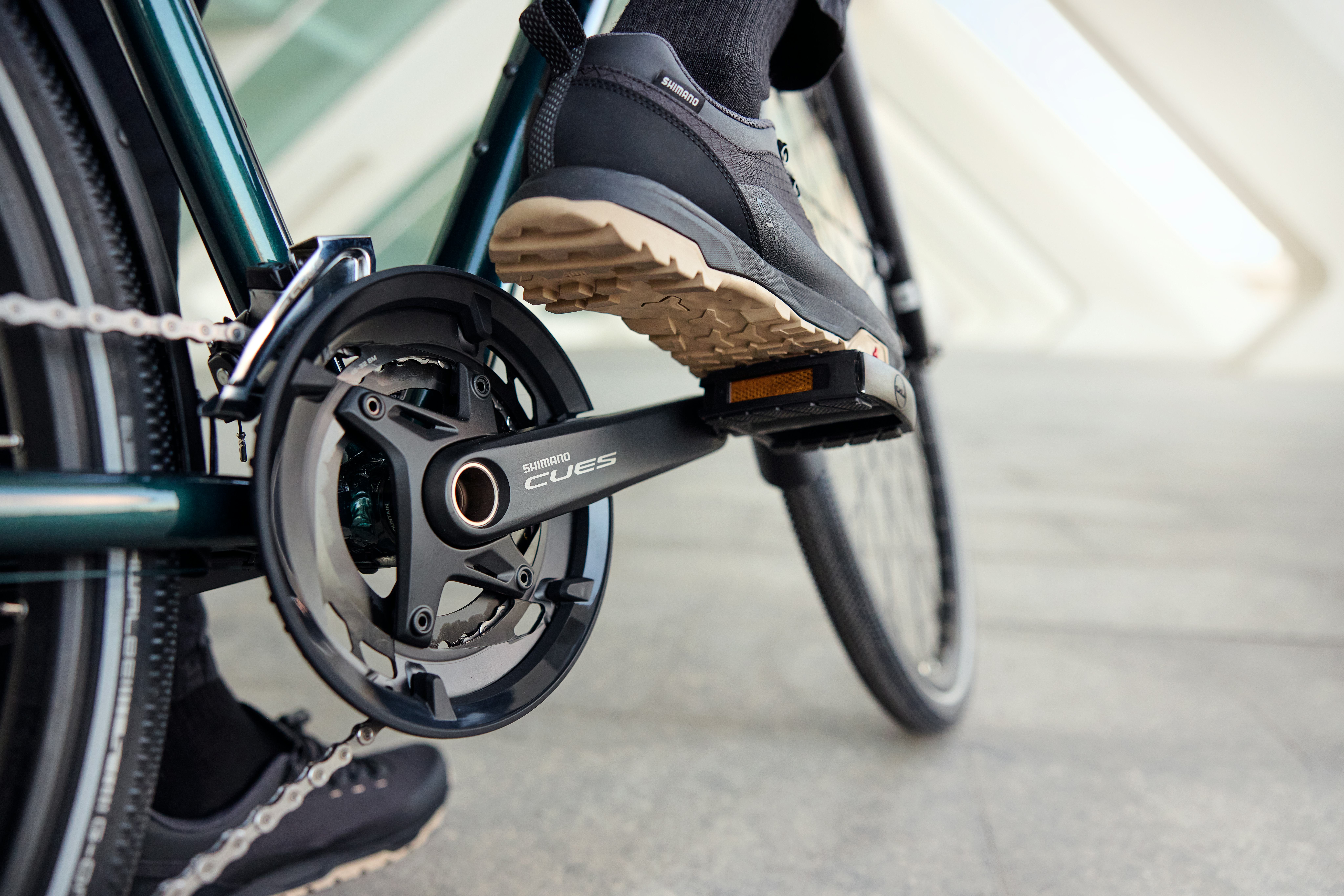
Shimano CUES — the name is derived from Create Unique ExperienceS — is not an innovative, standalone groupset or just a new product line, says Tim Gerrits, leader of Shimano’s product team in Europe. “It’s a completely different approach to how bicycle drivetrains in the mid-range should be designed and maintained.”
One cohesive ecosystem
Where Shimano previously worked with numerous groupsets and a clear good-better-best hierarchy in the entry-level to mid-range segments — think of Altus, Acera, Alivio on mountain bikes and Claris, Sora, and Tiagra on road bikes — CUES replaces all of those series. This is a single cohesive ecosystem of 9-, 10-, and 11-speed components. The goal is to create a simple, versatile, and future-proof foundation for bicycle manufacturers and retailers, and a better experience for consumers.

Interchangeable
“Previously, Shimano followed the traditional trickle-down strategy. We first launched new technologies in the high-end groups. Over time, these would filter down to lower segments. CUES breaks this method by focusing on user-friendliness and reliability for a broad audience from the start,” says Gerrits.
“Crucial here is that CUES components are flexible for use on all types of bikes and interchangeable between 9-, 10-, and 11-speed groups. For example, a uniform tooth spacing and the same cable pull make it possible to use components in a wide range of applications; they are designed around the same basic principles. This makes CUES compatible and suitable for all kinds of bikes, from mountain bikes and city bikes to e-bikes and trekking bikes.”
More convenience and efficiency
For the bicycle industry, this offers several significant advantages. Bicycle manufacturers experience more convenience in areas such as the R&D process and specification choices. “One drivetrain for a variety of frames makes installation easier and also offers advantages in aftersales and warranty support.”
In the workshop, retailers experience greater simplicity in inventory management. Instead of keeping dozens of small parts in stock, the components of the CUES ecosystem suffice. This means inventory doesn’t become obsolete quickly, reducing the risk of out-of-stock situations.
“There is also more convenience in maintenance and service because of the interchangeability of parts. A bike technician can perform repairs more quickly without constantly checking whether a part fits a specific group. This shortens repair turnaround times and enhances efficiency in the workshop,” says Gerrits, who also notes that CUES provides a clear proposition for consumers. “There’s no confusion; you have CUES and nothing else.”
Gradual rollout
CUES was launched in early 2023, slightly later than originally planned due to the pandemic Mountain bikes were the first to launch CUES directly from the factory. Lifestyle categories followed, and now the technology has also landed in road bikes.
Gerrits speaks of a successful, unforced rollout. “The transition to CUES just needed time, especially for OEMs. Calm and careful planning were key. If a factory in, for example, Eastern Europe has been making a certain model for five or six years and the bill of materials (BOM) already includes components and specifications, that process needs to be completed first. It’s not possible to continue producing both portfolios side by side.”
A no-brainer
Virtually all manufacturers now work with CUES, and retailers are also familiar with it. Stocks of old groupsets have been depleted, and CUES-equipped bikes simply require maintenance with original replacement parts.
We are truly at a turning point, CUES will become the standard for retailers”
“We are truly at a turning point, CUES will become the standard for retailers. Recently, I visited dealers. Everywhere you go, whether it’s a sporty or all-round store, CUES has been fully embraced. I haven’t heard anyone say, ‘Give me Altus, Acera, and Alivio back.’ CUES is a no-brainer,” says Susana Martin, Shimano’s marketing manager for the lifestyle category.
Widely known
She also points to research among retailers in Europe. “The awareness of CUES is exceptionally high. In 2025, 96 percent of our dealers were familiar with CUES, compared to 91 percent in 2024. In recent years, we’ve made CUES a standard part of our training offering. We are committed to strengthening market penetration and accelerating it. The focus is on our dealers, on technological excellence and universal compatibility. But we will also launch consumer campaigns to make the technology better known to end users.”

Huge sales potential
Behind the scenes, technological development continues, which naturally helps make CUES more mainstream. Martin: “It’s wonderful to see how versatile CUES is and how suitable the technology is for various purposes. With the newly launched CUES Polished Silver, we meet the needs of custom builders. They too are building their bikes with CUES. At the same time, we’ve integrated Di2 technology. This is the backbone for collaboration with bikes from other providers, such as Bosch, for integration. This greatly increases the sales potential.”
Dit artikel is gesponsord door Shimano.