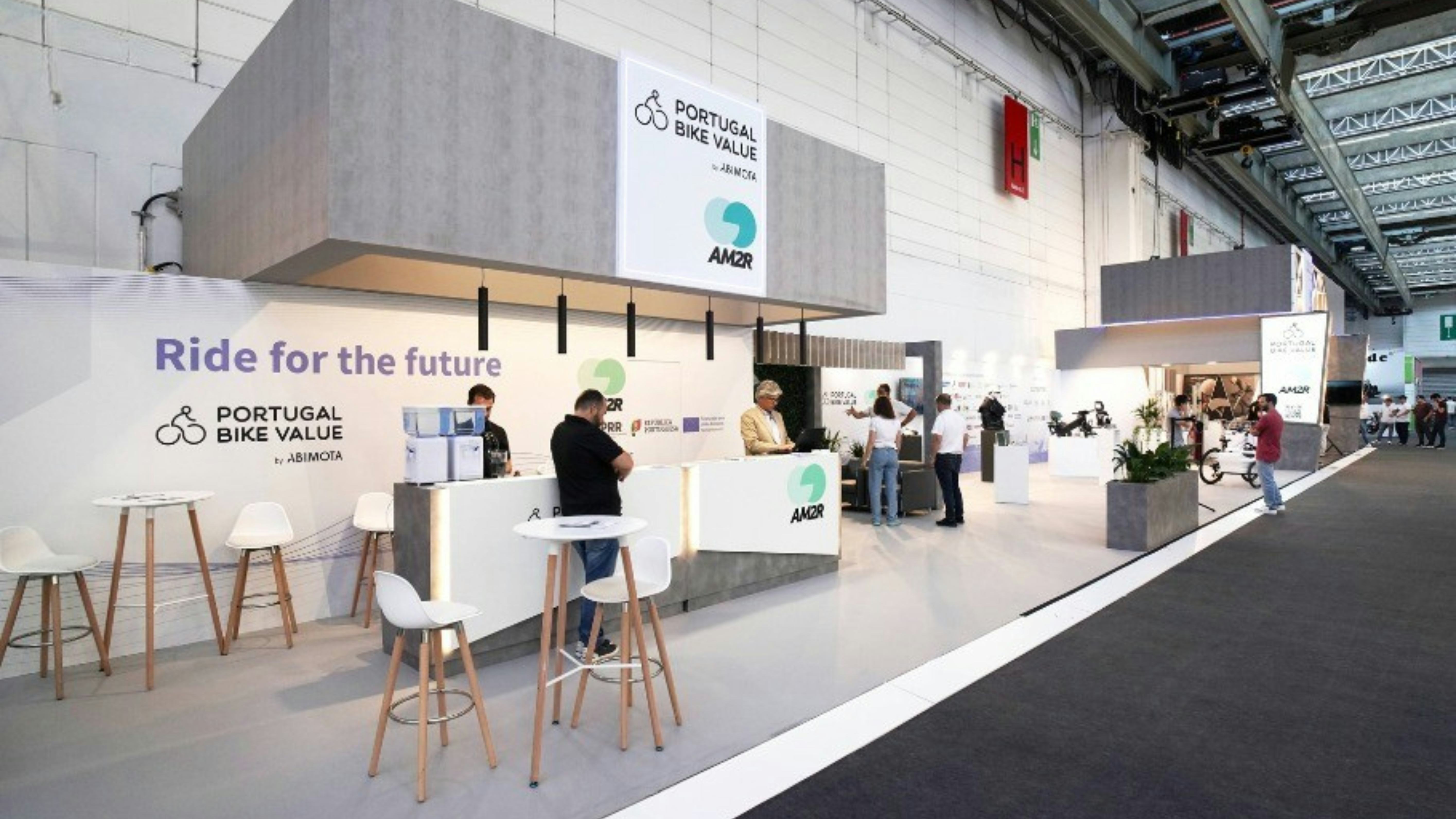
ABIMOTA, Portugal’s national bicycle association, launched the AM2R project in October, 2021, to help align consortium partners and promote outputs internationally through their Portugal Bike Value brand. Although it will not be extended beyond its PRR end date, it’s momentum will continue.
“Continuity doesn’t require an administrative extension,” Vital Almeida, president of ABIMOTA claims. “What matters is that the capabilities created by AM2R remain in Portugal, and are put to work for Europe.”
The road ahead
The programmes next phase will be driven by private sector momentum and complementary funding channels including Horizon Europe, Digital Europe, CEF and national innovation funds. It will prioritise certification capacity, scale testing facilities, embed new technologies into EU standards, and reduce the dependence on Asian supply chains. For example, components previously imported from Asia are now being produced locally by firms including Rodi and Triangle’s to strengthen supply chain resilience.
AM2R has also created a unified framework bringing together over 44 entities, from manufacturers to universities and technology centres, that are aligned with the EU Green Deal and digital transition goals.
Major milestones that have already been achieved including the development of 55–80 new Products, Processes and Services (PPS) and the operational start-up of BIKiNNOV (Bike Value’s Innovation Centre).
Portugal’s soft mobility lab
At the centre of AM2R’s legacy sits BIKiNNOV, a national hub for R&D, testing, certification and innovation in soft mobility. It is where industry, academia and policy meet to validate technologies, from e-bike systems and lightweight materials to circular design and safety compliance.
“BIKiNNOV is the operational backbone of everything we’ve built in AM2R,” Almeida says. “It gives Portugal the testing and certification capability to compete at the highest level, and it gives Europe a new, trusted node in the mobility innovation network.”
Several PPS achievements
The programme’s most visible progress has been the pace of technology maturation and industrial uptake. AM2R’s PPS pipeline includes internationally recognised outputs such as:
- PPS 61: A real-time V2X communication system for cyclist and pedestrian safety, which was awarded ‘Best Demo 2025’ at IEEE Vehicular Networking.
- PPS 78: An intelligent document scanning system supporting Industry 4.0 factory digitalisation.
- PPS 80: A Green Cloud platform enabling real-time analytics and carbon tracking across mobility supply chains.
Upgrades in factory production
On the factory floor, production upgrades have also delivered measurable gains including:
- plasma-based surface treatments adopted by Europa Coatings and Ciclo-Fapril,
- reduced energy use by 30% and chemical waste by 45%,
- lightweight material development through Carbon Team and INEGI,
- and carbon fibre solutions that can reduce bike weight by up to 30%.
Additionally, Rangel’s smart warehouse system, integrated with Green Cloud technology, has improved delivery accuracy by 35% while reducing emissions through AI route optimisation. Circularity has also moved from concept to practice, with textile offcuts being recycled into new composites (CeNTI) and aluminium scraps reused with near-zero loss.
From OEM to ODM
AM2R has delivered concrete value across industrial and institutional partners. For manufacturers, the shift has been strategic. Companies such as Triangle’s, Rodi, SRAMPORT and Polisport have advanced industrialisation and moved up the value chain, developing proprietary technologies with export potential. In fact, some partners report over 80% payment execution, ready to scale after PRR.
For universities and research centres, including the University of Aveiro, the University of Coimbra, INEGI, CeNTI, CITEVE, the programme has changed the role of research from publishing to productization. Market-ready prototypes and licensable technologies are emerging, bridging the gap between lab and factory.
The final countdown
In the months leading up to June 2026, AM2R will focus on consolidating outputs into an official AM2R strategic roadmap with policy recommendations, as well as completing PPS documentation, final commissioning and the operational handover of BIKiNNOV.
With BIKiNNOV operational, several PPS’s ready for market transfer, and an integrated industrial platform, Portugal’s two-wheel sector is entering a new era. AM2R does not need an extension. It needs momentum, and it looks increasingly European. “AM2R proved that Portugal can do much more than assemble bikes; we can engineer solutions the world has been waiting for,” Almeida concludes.
This article is sponsored by ABIMOTA.