

Frank Schneider, Chief Sales Officer at Universal Transmissions today, started as Gates' first advising sales rep in Europe in 2011. To be absolutely sure what he was selling and talking about, he wanted to understand the system's limits for himself.
Testing a belt drive platform
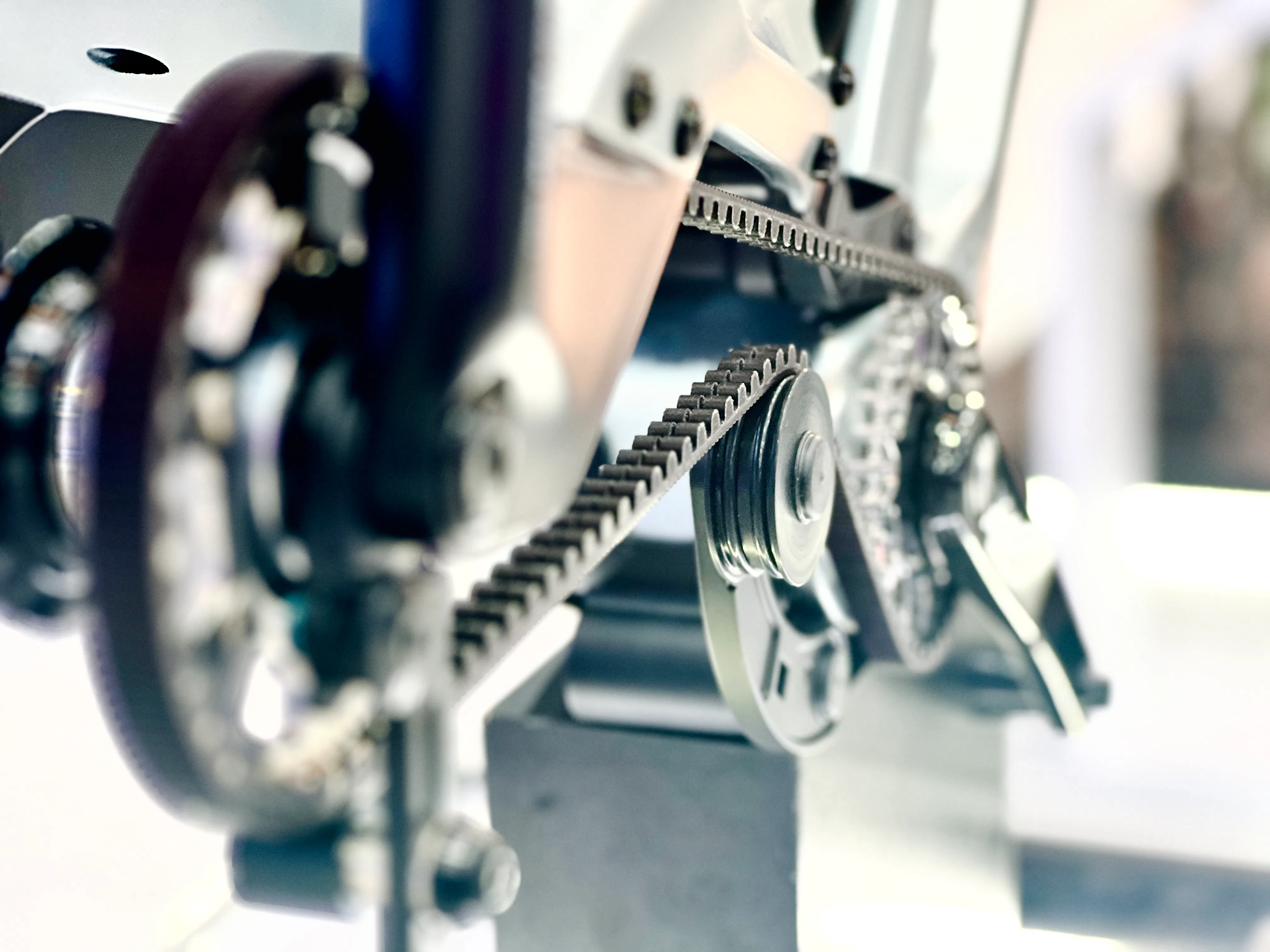
That's why, in 2012, the former German downhill vice champion lined up at the legendary Megavalanche in Alpe d'Huez. While most competitors raced full-suspension downhill bikes, Schneider deliberately chose a single speed hardtail equipped with a Gates belt drive. The race started on the glacier at around 3,300 metres above sea level, with snow at the top and mud, rocks and rough terrain all the way down.
"The result was never my priority," Schneider recalls. "I wanted to find out whether a belt drive would perform reliably under the toughest possible conditions." Around 45 minutes later, he crossed the finish line as winner of the Masters category. For Gates, the race demonstrated that its then-new CDX belt drive platform could withstand extreme off-road conditions. For Schneider, it marked the beginning of a journey that continues to this day.
From professional racer to development partner
Frank Schneider spent a decade competing internationally for Nicolai as a professional downhill racer. At the same time, Nicolai founder Karl-Heinz ‘Kalle’ Nicolai was working closely with Gates to further develop belt drive technology for off-road applications. Schneider's first encounter with the system came almost by accident in 2009.
"I was asked to ride a belt-driven dirt bike for a Nicolai catalogue photo shoot. After the first lap I immediately noticed the difference. The ‘air-time’ and acceleration felt so much different plus quieter, more direct and remarkably efficient." Shortly afterwards, Schneider started his training as a certified mechanical engineering technician, specialising in product design. Suddenly, his racing experience and technical education complemented each other perfectly. "During my studies, Kalle Nicolai called me and asked whether I would be interested in developing the Gates belt drive business across Europe. I didn't have to think twice."
Practical experience creates credibility
Schneider's greatest asset was the combination of racing experience, technical know-how and an extensive network within the bicycle industry. On his first work day at Eurobike in 2011, he already knew many product managers and engineers personally. After the show, several customer-friends were ready to give it a try. For Schneider, however, one principle has always been fundamental. "I've never recommended anything that I hadn't ridden or tested myself."
That philosophy continues to shape Universal Transmissions today. New products and solutions are first evaluated by the company's own team before being recommended to OEM customers. Insights gained from testing and development projects are fed directly into technical support and product consulting. "We've never pressured customers into adopting a solution," Schneider says. "Instead, we've always encouraged them to take the time to develop the system properly and involve us whenever questions arise."
I've never recommended anything that I hadn't ridden or tested myself”
Supporting OEMs from concept to production
Today, Universal Transmissions supports more than 600 OEM customers across Europe. The discussion is no longer about whether belt drives work. Instead, the focus has shifted to integrating the technology as effectively as possible into modern bicycle platforms, particularly in the fast-growing e-bike segment.
This is where the company's engineering expertise comes into play. Working closely with product managers and frame designers, the team analyses the intended application, drive system, frame construction and geometry before developing the optimal specification. "Very often it's the small details that determine long-term success," Schneider explains. "A precise belt line, sufficient frame stiffness or the correct design of the frame opening for belt installation may seem minor individually. Together, they determine how reliably the bike performs over its lifetime."
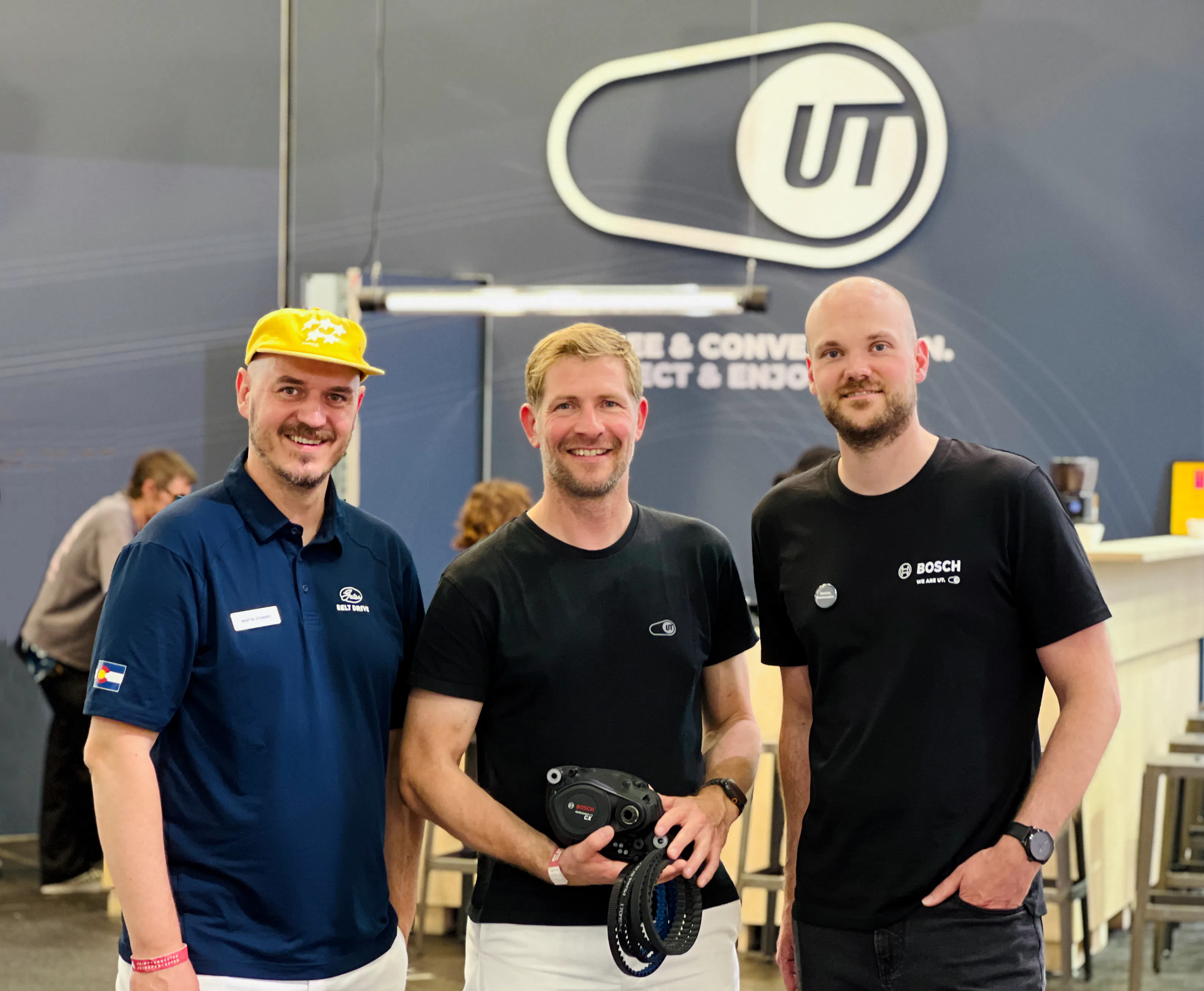
To support manufacturers frame development, Universal Transmissions now operates its own frame test facilities. These allow belt drive compatibility and frame performance to be evaluated long before series production begins. The objective remains the same: identify potential issues early and prevent problems later in the development process.
In the company's early years, Universal Transmissions even converted existing bicycle models to belt drive systems itself. “We wanted product managers to experience the system for themselves. You only understand the difference once you've ridden a belt-driven bike."
New drive concepts are changing the market
The latest generation of Motor Gearbox Units (MGUs), presented at this year's Eurobike, is further increasing the relevance of belt drive technology. "Belt drives are an ideal match for these systems," says Schneider. "Powerful e-bike drivetrains without external derailleurs benefit directly from the belt's durability and low maintenance requirements."
20 years of experience – and still curious
Over the past two decades, Universal Transmissions has grown steadily. Around Frank Schneider, the company has built a team of passionate cyclists, engineers and product specialists who continue to test ride and refine new solutions themselves. Despite all changes, the company's approach has never changed.
"We openly share our experience with every customer," Schneider says. "If we don't know something with certainty, we say so. And when we recommend a solution, it's because we've validated it ourselves."
This article is sponsored by Universal Transmissions.


