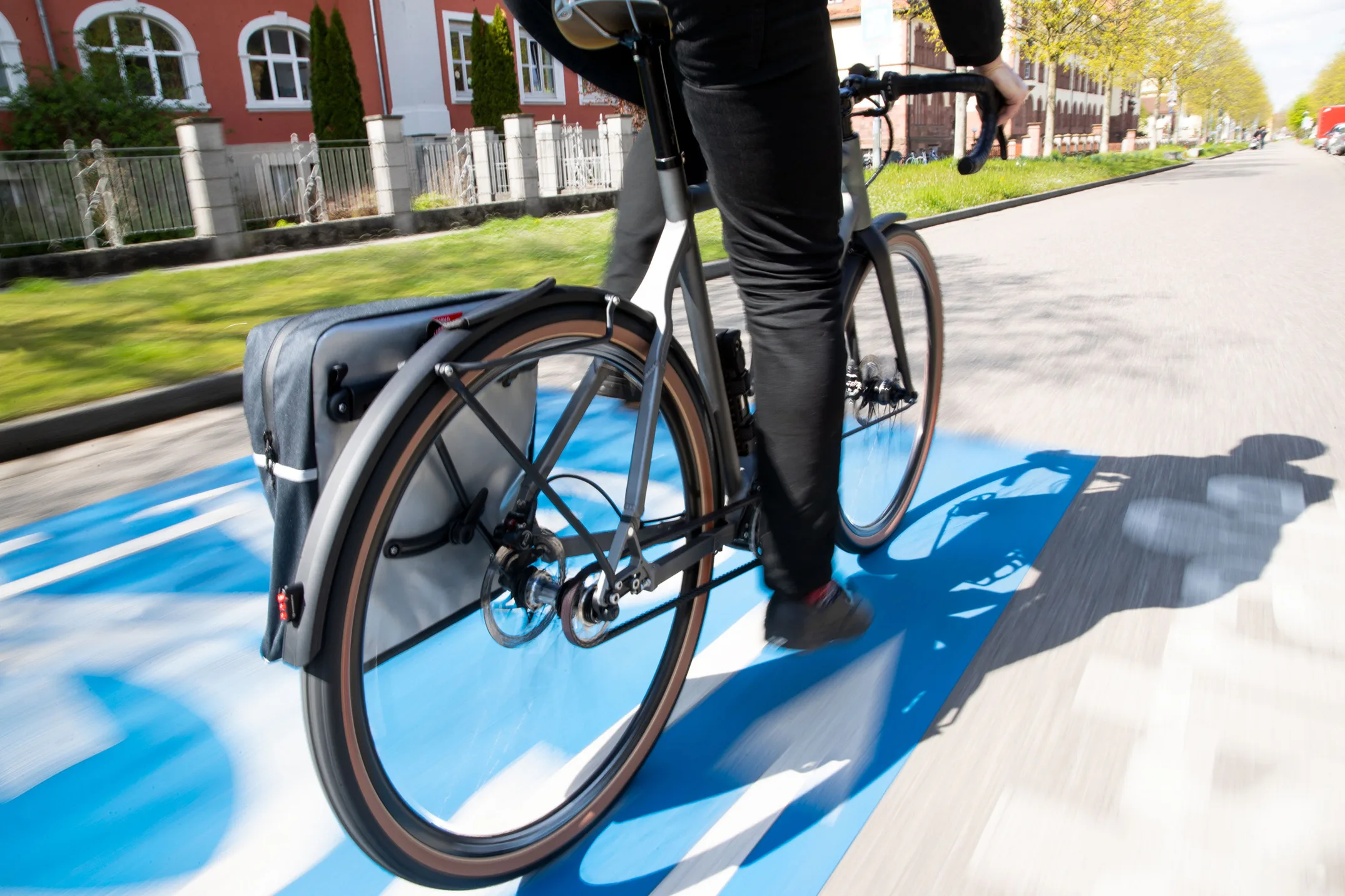
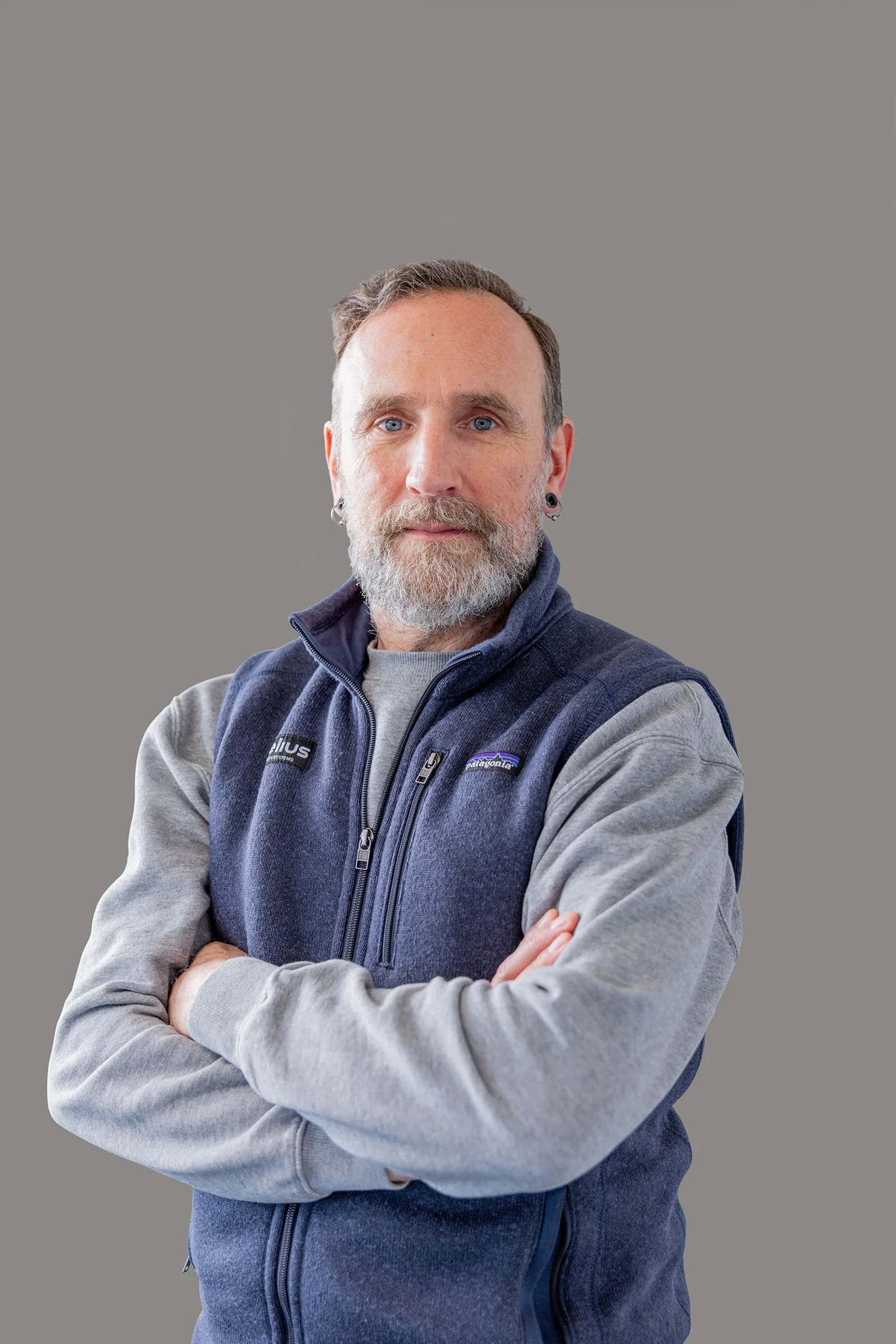
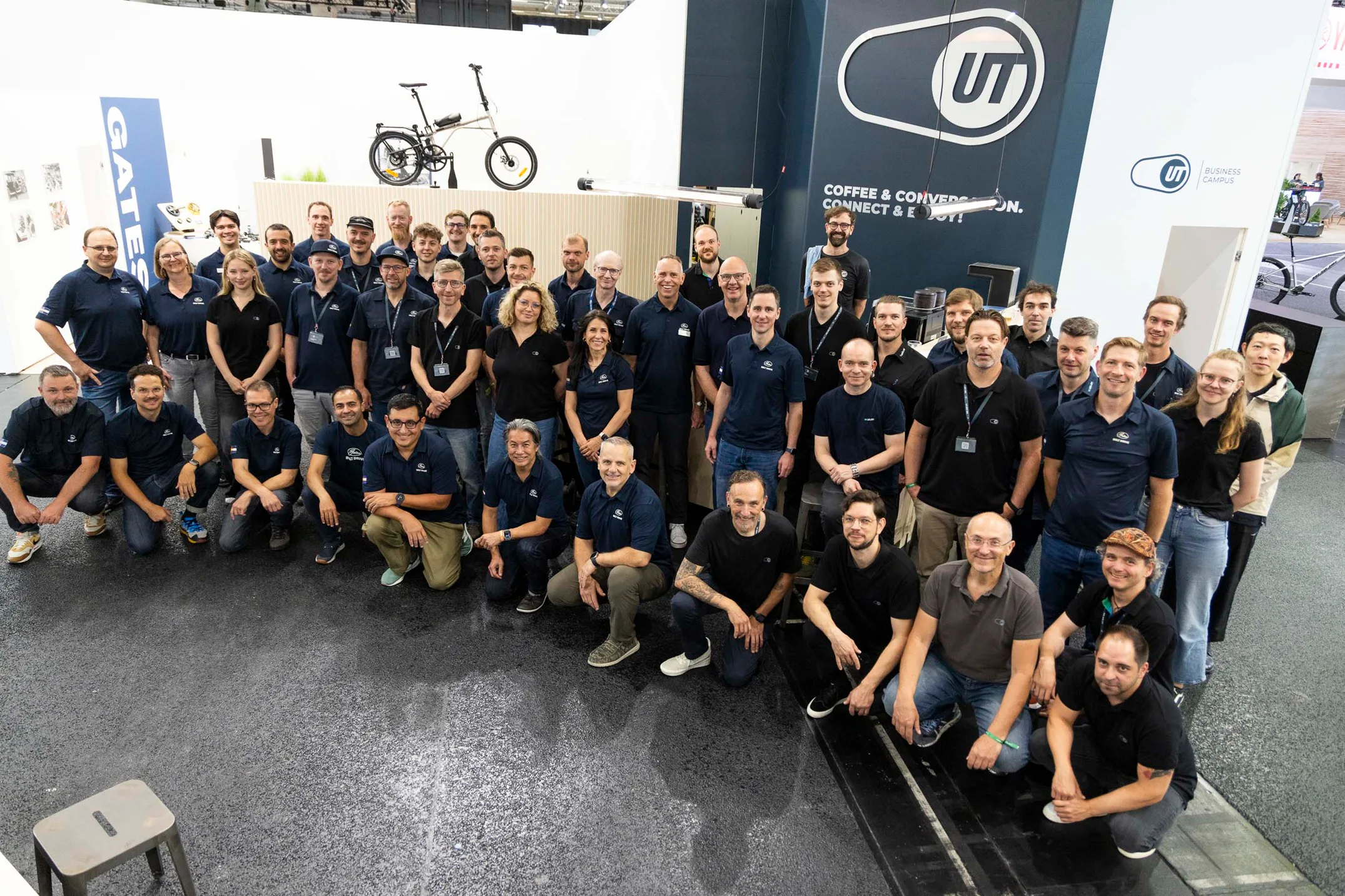
“We are convinced that nothing can replace personal conversations,” said Elmar Keineke, chief marketing officer of Universal Transmissions, the Gates OEM support and distribution partner in the DACH region. “Especially in dynamic market conditions, direct exchange across the value chain is essential.” In 2027, Gates will celebrate 20 years of its Belt Drive system in bicycles. Since its introduction, the carbon-reinforced belt drivetrain has evolved from a niche alternative into a widely adopted solution across urban mobility, commuting, performance MTB and e-bike categories.
Low maintenance, clean operation and long service life continue to define the platform. But the strategic importance of belt drive is increasingly tied to a larger technological shift. “Over the past two decades, we have seen belt drives move from curiosity to strategic platform components,” Keineke explains. “OEMs today are not simply evaluating alternatives; they are designing entire concepts around long-term system durability and rider experience.”
When motor output redefines drivetrain demands
E-bike motor performance continues to rise. Just a few years ago, 85 Nm of torque was considered the benchmark. Today, 100 Nm and above is becoming standard in many segments.
As torque increases, drivetrain systems face higher stress levels. Wear, servicing frequency and durability become critical factors for OEMs and end users alike.
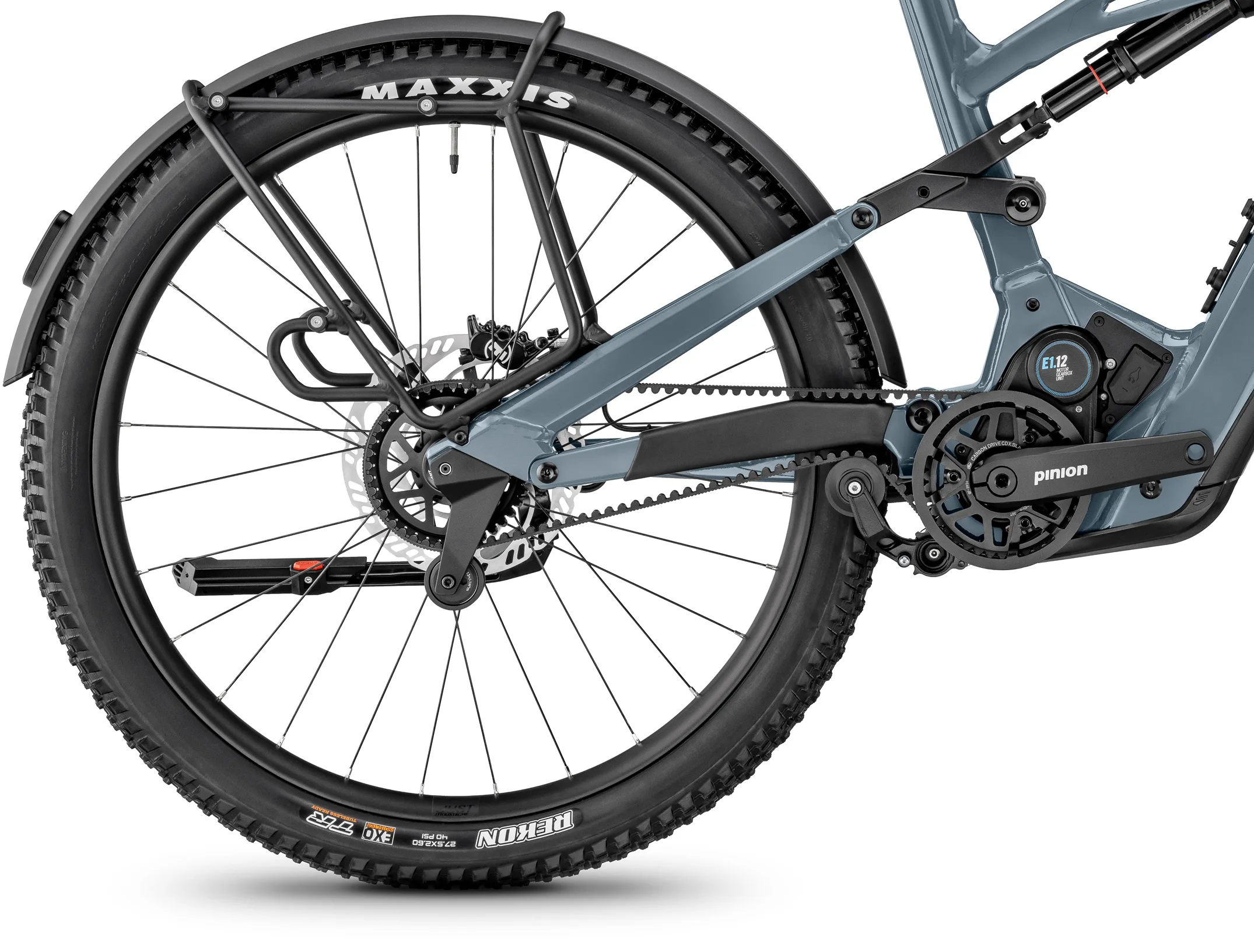
This has accelerated interest in integrated systems, particularly Motor-Gearbox Units (MGUs), where motor and transmission are combined into a single system architecture. Belt drive systems are emerging as the preferred complement to these platforms, particularly in high-load applications such as performance e-MTB.
“With higher torque outputs, the drivetrain becomes a crucial element of the entire bike system,” Keineke notes. “Reliability under load is no longer optional; it is fundamental to demonstrating that new drivetrain technologies can perform at the highest level.”
From urban mobility to downhill performance
Collaboration with professional downhill teams has pushed validation far beyond everyday commuting, placing belt drive systems under the extreme conditions found at the highest levels of competition.
Frame manufacturers are increasingly developing new platform concepts engineered around belt integration from inception. In high-performance settings such as downhill racing, teams have identified measurable advantages in belt systems, including improved drivetrain efficiency, reduced unsprung mass and consistent power transfer under load.
These attributes contribute directly to enhanced control, greater responsiveness and sustained reliability under extreme conditions. This is also being demonstrated through real-world competition. Gates launched the 100K Belted Purse, the largest prize purse in downhill mountain bike racing, created to encourage teams and athletes to compete on belt-driven platforms and push drivetrain performance under elite race conditions.
The proof came at the 2025 UCI World Cup in Leogang, Austria, where Oli Clark of MS Racing claimed first place in the junior men's DH aboard a belted Zerode, a historic first for belt drive at the UCI DH podium level.
“What we are seeing is a shift in perception,” says Keineke. “Belt drive is no longer viewed as limited to city bikes. It is being validated in some of the most demanding riding environments.”
The road ahead
As electrification advances and system integration becomes more complex, drivetrain requirements will continue to evolve. Belt technology, gearbox integration and platform-specific frame development are increasingly interconnected, and the brands navigating this shift successfully are not doing it alone. For Gates, that has always been the point; the technology moves forward through the partnerships, the conversations and the shared commitment to getting it right.
“We look forward to welcoming partners, dealers and industry stakeholders for open conversations about the future of drivetrain systems,” says Keineke. “Visibility, continuity and collaboration are especially important in transformative times.” Learn more about Gates Belts for Bicycles at www.gates.com/Bicycle
This article is sponsored by Gates.